
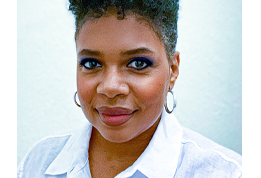
Carla Thomas
The Truth Contributor
I’m in what I like to call my Re-Education of Me era. After years of taking systems at face value, i.e., what I was taught in school, what I saw in the media, what I was told to believe, I started asking deeper questions. Earning my master’s degree in Social Justice and Community Organizing didn’t just give me tools, it gave me clarity. Some of these truths I already knew. Others hit me like a slap in the face. But all of them changed how I see the world, and now, how I move in it.
And here’s the deal: once you learn a truth, you become responsible for it. You can’t unsee it. You can’t unknow it. And you sure as hell can’t act like you don’t understand what’s really going on.
So as I continue unlearning and relearning, I want to share six truths that have shifted my thinking, fueled my passion and set me on a course toward real liberation, for myself, for my people, and for the communities I love.
This list is not exhaustive by any means, or to some, not even that deep but these are just a few new understandings that matter to me and change how I move.
- DEI Wasn’t Made to Liberate Us
The concept of diversity, equity and inclusion was never designed to free us, it was designed to fit us into systems that still see us as lesser. Inclusion often just means being allowed into spaces while still being treated as inferior. They might open the door, but they don’t change the rules, the culture or the power dynamics. Microaggressions still thrive. Bias still breathes. And we’re expected to be grateful just to be in the building. This is the illusion of inclusion: representation without respect, presence without power. DEI in most spaces became a checkbox, not a commitment.
That’s not to say DEI hasn’t had any impact. Some doors have opened. Some conversations have shifted. But access is not freedom. And we can’t confuse performative diversity with structural change. Especially now, as companies quietly cut their DEI teams and as Trump openly targets policies that protect Black and Brown people. We’re being shown in real time that DEI was never the plan for our liberation, it was the compromise. And compromises don’t set people free.
- Cultural Hegemony: The System Trained Us to Think It’s Normal
There’s a reason so much of what we accept as “normal” feels hard to question: it was designed that way. Cultural hegemony is the process by which the dominant class uses everyday systems like education, religion and media, to shape how we see the world. They taught us what to believe, what to value, and what to aim for. Over time, their worldview started to feel like common sense. But it’s not, it’s programming.
Every major system we have, from how we learn to how we work, to how we worship, was put in place by the dominant class: wealthy elites, politicians, and corporate powerholders. These systems were never meant to liberate us. They were built to keep the working class working, producing, consuming, and staying busy, while the rich got richer off our labor, our loyalty, and our distractions.
Think about school curriculums that center white history and barely mention ours unless it’s slavery or civil rights. Or how standardized tests are built around white middle-class norms but are used to measure everyone. That’s cultural hegemony. Think about how media shows Black people as criminals or sidekicks, rarely as complex heroes, or leaders. That’s cultural hegemony. Or how religion was used to justify slavery and later respectability politics, telling us to suffer quietly, forgive endlessly, and pray our way through oppression. That’s cultural hegemony.
We were told success means “pulling yourself up by your bootstraps,” even though they never gave us boots. We were taught to see poverty as a personal failure, instead of a rigged system. We were taught to worship hard work, even when the work doesn’t lead to wealth. This isn’t just random, it’s intentional. They’ve used these systems to make inequality feel natural.
- Justice Isn’t Independence
“We need to stop fighting for equality and fight for independence.” — Tunis Campbell
Tunis Campbell was a Reconstruction-era leader, landowner and fierce advocate for Black self-governance. After the Civil War, he helped freed Black people establish self-sustaining communities in Georgia, complete with schools, protection and political representation. He wasn’t just about freedom, he was about freedom with infrastructure. And he understood early on that begging the same system that enslaved us to now save us was a losing strategy.
We’ve been taught to chase justice, march, protest and demand new laws. But justice in America often means asking the same system that harmed us to fix itself. It means asking for equality within the confines of a game rigged against us. Independence is something else entirely. It means building structures that don’t rely on them at all. It means owning land, so we’re not pushed out. Running businesses so we control our economy. Educating our children with our truth, not their version of it.
Justice asks for a seat at the table. Independence builds a new table and owns the land it sits on. We need less permission and more power. Because liberation won’t be legislated. It’ll be constructed. By us.
- We Fund Everybody’s Future but Our Own
Black America has over $1.6 trillion in spending power. That’s enough to shift economies, influence markets and build real generational wealth. So why don’t our communities reflect that kind of power?
Because we’ve been conditioned to spend, not to build. We’re encouraged to chase image over infrastructure, to wear our wealth instead of grow it. We pour billions into beauty supply stores, gas stations and convenience shops owned by people who don’t live in our neighborhoods, don’t invest in them and, in many cases, don’t even like us. Our dollars build their empires, send their kids to college, and what do are communities have to show for it? Nothing.
It doesn’t have to be this way. That’s the power of collective economics, when we stop spending individually and start building intentionally, we can create something that serves us.
And here’s an example we can follow. In response to racist and discriminatory hiring practices by the New York City Omnibus Corporation, Black community leaders and businessmen in Harlem came together to create their own bus company. They pooled their money and launched People’s Transit, a bus service designed by and for the Black community. It was short-lived due to legal and political pressure, but it was a bold and brilliant example of what’s possible when we invest in ourselves rather than waiting to be included. This is real collective economics in action.
It starts with trust though. Trust in ourselves, in our vision, and in our power. It’s time to stop making everyone else rich while our own communities stay underfunded.
- White Adjacency Is a Trap
If you have to get sponsorship, permission, or backing from the dominant class just to do something for your own people, do you really have power? Or have we accepted a kind of dependence that looks like progress but feels like a leash?
We’ve been taught that being close to whiteness, through education, careers, the way we speak, dress, or move, somehow upgrades our worth. But proximity isn’t power. It’s performance. And the moment you stop performing the way they want, it can all be taken away, your job, your funding, your access, your platform.
Look at Colin Kaepernick. He had the education, the endorsements, the “model minority” image. But the moment he stepped out of line and took a knee for Black lives, the same system that celebrated him turned on him. Therein lies the trap. They’ll clap for you as long as you don’t make them uncomfortable. The minute you challenge their power, you’re reminded you never really had any.
We’ve mistaken being “the one they let in” or “the good negro”, as a flex, when in reality, it just proves they’re still the gatekeepers. True power doesn’t come from being accepted by them. It comes from accepting ourselves fully, realizing our power, and then building something that doesn’t require their nod of approval or finances.
White adjacency may bring comfort, but it won’t bring freedom. And chasing it keeps us tethered to systems that were never built for our liberation.
- Malcolm Wasn’t Dangerous, and Martin Wasn’t Soft
It frustrates me when I hear Black people compare the two as if we’re supposed to choose sides in a struggle that belongs to all of us. Some will say Martin was too soft, too forgiving. Others will say Malcolm was too radical, too aggressive. But that comparison dishonors what they both gave. They were both sacrificial. Both purposeful. Both powerful. And both gave their lives for what they believed in.
Martin had love. Malcolm had fire. But they were fighting the same beast, just in different armor.
Martin wasn’t just talking about dreams, by the end, he was denouncing capitalism, war, and economic violence. That’s why they killed him.
Malcolm wasn’t just talking about defense, he was building global solidarity and advocating for Black people’s international human rights. That’s why they killed him.
They weren’t opposites, they were complementary forces in the same movement. The system feared them both, not because they were extreme, but because they were effective. They were waking people up. And that’s always dangerous to power.
Once we realize this truth, that the fight for liberation doesn’t look one way, but is clothed in who we are, our unique purpose, our voice, our calling, then we stop criticizing and start contributing. We each have the ability to make a Martin and Malcolm impact, right where we are.
There’s no one right way to fight for freedom. But there is your way. So bring it. The movement needs all of us.
Final Reflection
These aren’t just my truths. They’re a call to remember who we are and how we got here. My Re-Education of Me era has taught me that liberation starts when we stop accepting the world as it’s been handed to us and start questioning everything.
Now it’s time for the Re-Education of Us.
Let’s revisit what we’ve been taught. Let’s disrupt what we’ve been told is normal. Let’s stop waiting for permission to do what we’ve always been capable of. Whether your lane is education, art, policy, healing, organizing, parenting, or entrepreneurship, your clarity matters. Your unlearning matters. Your action matters.
We don’t need to all think the same. But we do need to start thinking critically. Because once you know, you’re responsible. And once we know? We’re unstoppable!