 The Truth Staff
Eleven students are part of the ACES Exchange Program this year, a number short of past exchange classes. That is one of the tangible effects of the Trump administrations efforts to close off America to the rest of the world.
The ACES program has, for the past 30 years, been funded by the State Department in order to bring to the IUSA students who would otherwise not be able to afford to make such a trip on their own.
The State Department’s YES (Youth Exchange Study) , an initiative of Senators Ted Kennedy (D-Ma) and Richard Lugar (R-In), has been particularly successful in bringing in students from primarily Muslim countries – African, Southeast Asian, Middle Eastern. Now, however, the funding has been slashed. The students from those areas are down substantially this year, and next year, when the cuts take full effect, the number of students from countries of color, might be cut entirely, says Trace Ellis, director of the northwest Ohio ACES.
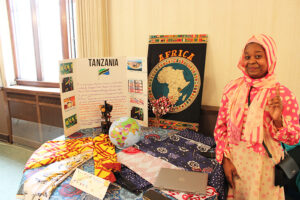
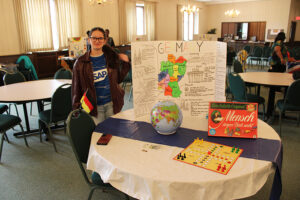
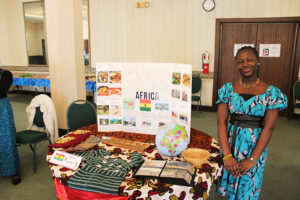
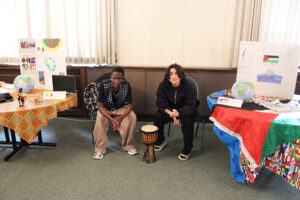
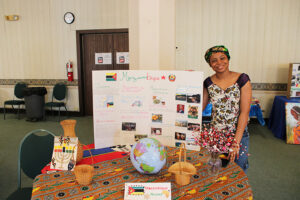
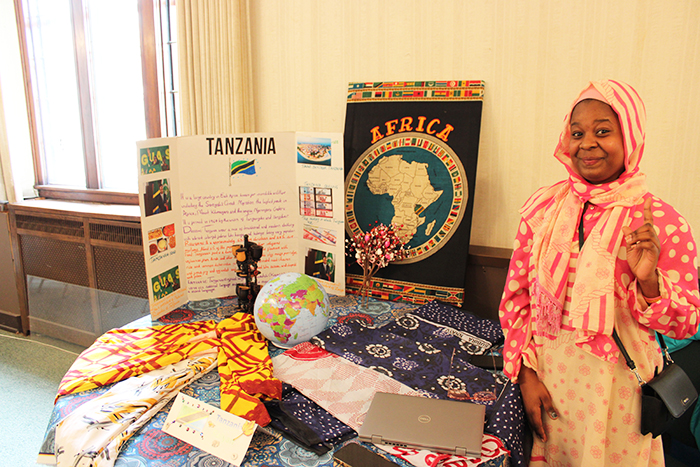
On Sunday, March 29, an ACES International Day was held at the Church of the Living God as the 11 students displayed information, fashion, memorabilia from their countries. Students from Liberia, Ukraine, West Bank Palestine, Mali, Mozambique, Germany, Tanzania, Ghana and Nigeria held forth in the church’s meeting space sharing their experiences there and in this new country.
For some, it’s a huge difference.
Esther, the 15-year-old student from Ghana, shared one of her new experiences with Ellis recently. “She spoke of what it was like to have a shower for the first time,” said Ellis.
While funds for the students impacted by the YES Program will be further reduced, the Trump administration has preserved the funds for the State Department’s FLEX (Future Leaders Exchange) program. Those students are primarily from Eastern Europe and Central Asie – the former Soviet bloc nations.
Increasing the difficulty for students from countries of color to get to America is the fact that so many of those countries, 75 in fact, are on the Trump administration’s recently-announced indefinite pause on nonimmigrant visas. Nineteen of those countries are on a full ban.
This means that students in those countries will have to seek an exemption, said Ellis.
Nevertheless, some students from countries of color did make it to America this year before the ban is in place. Locally Mamadou from Mali, Success from Liberia, Raiyan from Tanzania, Esther from Ghana, Nsuwa from Mozambique and Tamaya from Nigeria joined Alisa from Germany as part of this year’s ACES cohort. These students were joined by two students from countries at war – Alex from Ukraine and Abood from West Bank Palestine. Both Alex and Abood will be returning in June to war-torn countries and to extremely difficult circumstances, said Ellis.