
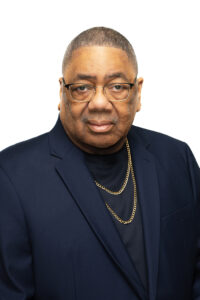
By Rev. Donald L. Perryman, Ph.D.
The Truth Contributor
I’m Back! – Michael Jordan (after returning from retirement)
Sherrod Brown’s recent important announcement to “get back in the fight” to return to the U.S. Senate is not as iconic or celebrated as Michael Jordan’s two-word “I’m back” return to a stellar basketball career from an experimental affair with baseball. Yet, the announcement carries a similar weight of expectation.
For Brown, though, the deeper issue is not just about returning to the arena; it’s whether an aged Democrat with deep roots in labor and working-class politics can stitch together voter fragments and patches of different hues into a winning coalition in a state that has tilted solidly red.
The stakes could not be higher.
The Cook Political Report has called this race the “linchpin” of Democrats’ path to a Senate majority. Brown is the only Ohio Democrat with the stature to make the race competitive, and his candidacy shifts the contest from “Likely Republican” to “Lean Republican,” and the Democrats desperately need his candidacy.
On the GOP side, Jon Husted enters the race with Trump’s endorsement, DeWine’s pragmatic polish and a head start in fundraising. And, you already know! They dropped nearly $300 million in attack ads to drive up Brown’s negatives in his last election. They will not hesitate to do it again.
So, the real question is not whether Brown has the stomach for another battle — he does — but whether he can inspire the people of Ohio to believe this fight belongs to them too. That means quilting together a new coalition, one that weaves the tapestry to include Black voters in Columbus’ Near East Side, young voices in Cincinnati’s Over-the-Rhine, suburban parents in Hilliard and Dublin worried about healthcare and schools, and yes, the disillusioned workers in Mahoning Valley or the central city wards of Toledo who feel forgotten by both parties.
The reality, though, is that mobilization will not happen by accident. As a Democratic Party insider told me, “Democrats have to figure out how to mobilize young voters to tip the scales. That will be difficult with another older man on the ticket.”
The logic is on point. To build a needle and thread coalition that can search in every corner of the statewide marketplace for odd scraps that weren’t supposed to match, sew them together in just the right place, and in a manner that enables them to withstand the strain is tediously difficult but not impossible.
History, however, offers both warning and wisdom. Past African American candidates in Lucas County have overwhelmingly carried central city wards but fallen short countywide, showing the danger of running fragmented campaigns.
Brown cannot afford fragmentation, which is leaving pieces of political fabric unstitched. He must, instead, do the harder work of creating a unified whole from diverse swatches of support — from the church pews on Cleveland’s East Side or Toledo’s central city to the coffee shops of Columbus’ Short North and refined Victorian Village; from the weathered warehouses in West Dayton or Cincinnati’s historic Avondale neighborhood to the revitalized, artsy, and upscale Over-the-Rhine district. If Brown can weave that quilt together, then Ohio is in play for the Democrats. If he cannot, the state will maintain its current near ruby red-state identity.
Can a seasoned champion return, rally the people, and reclaim what was his?
Although it may not echo Michael Jordan’s “I’m back” fax in cultural memory, Brown’s candidacy raises a parallel question: Can an aging veteran still adjust to the curveballs thrown by the opponent and deliver when it counts?
It remains to be seen.
However, make no mistake. If Brown succeeds, it will be a collective triumph — a reminder that coalitions still matter and ground games still win.
Because in the end, this campaign is not about one man’s comeback. It is about Ohio’s.
Contact Rev. Donald Perryman, PhD, at drdlperryman@centerofhopebaptist.org