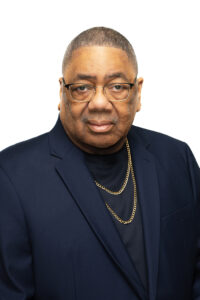
By Rev. Donald L. Perryman, Ph.D.
The Truth Contributor
It is easier to build strong children than to repair broken men. – Frederick Douglass
Toledo spent a year preparing for one weekend. Gun violence, it repairs after the fact.
An entire year. That is how long MetroParks Toledo spent planning Watershed Weekend before it opened this month. In the days leading up to it, the team walked hour by hour through all four days of the event’s programming — with the chief of police, the chief of fire, the head of EMS, the mayor’s office, and the Lucas County commissioners all in the room.
That same weekend, a man was shot and killed on Evesham Avenue. Two more men were shot in the Lagrange area. Three more were shot downtown, just after 2 a.m. None of those scenes got a year of planning. Instead, they got whatever response showed up after the fact. So, the City of Toledo just proved it can mobilize — at least when it decides something matters enough and chooses to.
The Loud One
After the June 6 shooting that wounded 12 people at the Old West End festival, City Council moved an ordinance creating “special event safety zones.” During “peak safety hours,” anyone under 18 must be with a parent, guardian or adult over 25 — violations are a fourth-degree misdemeanor with civil fines of $250 to $500 for parents. Mayor Wade Kapszukiewicz frames it as shared responsibility. Council President Vanice Williams called it a starting point.
Nobody has asked the obvious question: would this ordinance have done anything about those who were actually shot in the 72 hours around Watershed Weekend — a 34-year-old and a 39-year-old in the Lagrange Street vicinity, three men in their early 20s downtown, and a 53-year-old man on Evesham Avenue.
None were unaccompanied minors. None were at a special event. Peak safety hours would not have applied to any of them.
The Quiet One
The city’s Save Our Community initiative serves more than 120 young people, ages 14 to 24, across Toledo. Eight violence interrupters work in schools, neighborhoods and community centers — building relationships, intervening when tension rises. Raymond Campos, the program’s commissioner, told WTVG the result has been a decline of almost 50 percent in citywide violence since 2021.
He also informed WTVG about a recent graduation ceremony where interrupters defused tension “before” it became a fight —nobody saw it, because nothing happened. Those are the quiet wins, he said.
Build Strong Children
Frederick Douglass said it is easier to build strong children than to repair broken men. Toledo has it backward. Save Our Community is in the business of preparation and prevention — building relationships and presence before the crisis. The mayor’s ordinance is “repairing” — after a mass shooting made national news.
Save Our Community apparently works. So does MONSE. Both are real, and both deserve credit for what they’ve done. But while the Toledo Police Department’s $120.6 million comes from the general fund, automatically, every year — Save Our Community and MONSE’s funding is a comparative thimble cup full in an ocean and runs on a patchwork of grants. It includes a federal block grant here, a state public safety grant there and pandemic relief money that’s already gone.
My point is not whether we need another program run and administered by the city — we don’t. It’s everything around the two that exist — the community organizations and churches at ground zero that know these blocks from the inside, evidence-based after-school programs, early childhood education and family resource centers where a parent already struggling to make a dollar out of 15 cents can walk in and get help instead of another bill.
Then, take that same year of planning. That same hour-by-hour coordination between police, fire, EMS, the mayor’s office and the county. Point it at building that ecosystem — in Lagrange, on Evesham Avenue, at the near downtown areas and throughout Toledo and Lucas County.
Not city programs managing community problems from the outside, but community-led organizations — funded and supported by the city — doing the work from the inside. Possess the same urgency for after-school programming, early childhood education, and family resource centers that City Council found for an ordinance in seven days.
Councilwoman Williams is right that families have a role. But a fine is not family support — it is the absence of it, dressed up as accountability.
If what the mayor calls shared responsibility is the framework, the investment must be shared too. The whole ecosystem — city and community, programs and families — must be built together, the way Watershed Weekend was.
Build strong children first. Everything else is repair work!
Contact Rev. Donald Perryman, PhD, at drdlperryman@centerofhopebaptist.org