

 By Asia Nail
The Truth Reporter
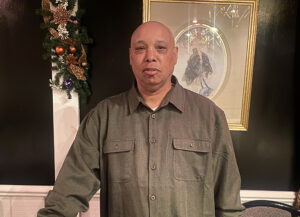
Long before activist Gerald Rose led a national organization, he was a Toledo youth watching his father fight for justice.
He lives in Atlanta now and leads the New Order National Human Rights Organization, which he says has grown to 22 chapters across the country. Over the years, Gerald has appeared on national television, met with elected officials and built an organization focused on civil rights concerns, racial profiling, employment issues and community advocacy.
And when something happens in Toledo, people still call him.
And he still answers.
 A Legacy Rooted in Ohio
“Half my friends on social media are from Toledo,” Rose says with a laugh. “I will never forget where I started from.”
That connection is bringing New Order back into the city once again. Representatives from the organization are expected to meet with Toledo Police Chief Michael Troendle on June 12 to discuss concerns about the relationship between law enforcement and minority communities.
For Rose, the issue is personal.
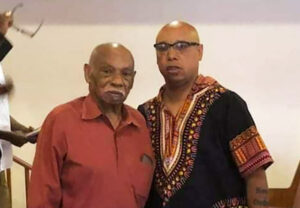
He is the son of Rev. Floyd Rose, a longtime Toledo minister, acclaimed civil rights leader and former president of the local NAACP chapter whose influence can still be felt across the city. During his 36 years in Toledo, Floyd Rose became known for advocating for fairness, equity and opportunity, often serving as a bridge between community members and those in positions of power.
For Gerald Rose, those lessons were not learned from a textbook.
They were lived.
Growing up, he watched his father confront difficult issues and speak up for people who felt unheard. He also saw the personal cost that often came with that work.
“I witnessed our church and house being put on fire,” Rose recalls. “Death threat calls came in daily.”
Those experiences helped shape the path he would eventually follow.
Even today, there is emotion in his voice when he talks about his father.
As Gerald reflects on that legacy, he admits there is one thing that still troubles him.
Despite Floyd Rose’s decades of service to Toledo, Gerald believes more should be done to preserve and honor his father’s contributions. During his lifetime, he has helped champion civil rights causes, encouraged collaboration across communities and worked tirelessly on behalf of residents seeking justice and opportunity.
“We must remember our civil rights leaders,” Rose emphasizes. “I feel it’s my duty to keep my father’s legacy alive.”
The comment raises a broader question for the community: How do we ensure that local civil rights pioneers are remembered once the marches end and the headlines fade? For many who know Floyd Rose, preserving that history is about more than recognition. It is about making sure future generations understand who helped build the bridges they now walk across.
One lesson from his father continues to guide him.
“He told me, ‘Son, if you’re in this business just to be seen, I would ask you to please choose a different path. But if you’re in this business to be for the people first, then this is exactly where you belong.'”
Those words never left him.
“I’m not here for fame. I’m not here to be seen. I’m here for my people.”
Over the last year, New Order has become involved in several local issues, including concerns involving police conduct and the treatment of children in schools. Rose pointed to a case involving allegations that a preschool child was forced outside without a coat during cold weather.
“When I come, I’m coming correctly,” he asserts. “And I’m coming on business.”
Concern Over Police-Community Relations
Today, much of Gerald Rose’s attention is focused on the relationship between police officers and minority communities.
Recent incidents involving Toledo police officers have sparked public criticism and renewed conversations about accountability, trust and respect.
Rose believes repairing that relationship will take more than statements and press conferences.
“We have to have more town hall meetings,” he says. “People need to know police are there to protect them, not come into neighborhoods and bully them.”
He is careful not to paint every officer with the same brush.
“All police are not bad,” Rose states. “We’ve got good ones. But the bad ones must be removed immediately.”
For him, the issue comes down to fairness.
When residents see people treated differently for similar actions, trust begins to erode. It doesn’t happen all at once. It happens little by little, like a crack spreading across a windshield. Before long, the damage reaches every corner.
Rose believes many people no longer hear the phrase “protect and serve” and automatically feel protected.
“It’s very hopeless right now,” he admits. “I don’t know if we can heal these situations overnight. But we’ve got to start somewhere.”
Part of that healing, he believes, requires officers to better understand the communities they serve.
“It’s sad how these officers are not from our community, but they work in our community,” he says, adding that too often residents feel like “strangers being judged by their surroundings rather than people being understood.”
The upcoming meeting with police leadership is an opportunity, he says, to move beyond frustration and toward solutions.
“I move on facts, not emotions,” Rose adds.
Beyond Protests: The Mission of New Order
That commitment to finding solutions has shaped New Order’s work for more than three decades.
While many people associate civil rights organizations with protests and press conferences, Gerald says much of the organization’s work happens quietly.
Members help distribute food, mentor young people and encourage individuals trying to rebuild their lives after incarceration, addiction or other setbacks.
Recently, Rose spoke at Georgia Works, a program that helps men transition back into society after prison.
“We told them, ‘You made a mistake in life, but God can make a way,'” he shares. “‘You’ve got to want it.'”
Hope, Rose says, is one of the most important tools a person can have.
He often avoids using labels for people facing hardship.
“I never say feed homeless people,” he explains during the interview.
To Gerald, people are more than their circumstances.
His organization focuses on restoring dignity and helping individuals see possibilities they may no longer see for themselves.
The group also works on employment issues, human rights complaints, racial profiling cases and concerns involving schools and public institutions.
At its core, Rose says, New Order exists to serve people.
Recognition, Sacrifice and Staying the Course
The work has earned attention far beyond Toledo.
Rose says New Order was recognized by the State of Georgia, and his name appears on a Wall of Fame at a Nation of Islam mosque in Atlanta, despite the fact that he is not Muslim.
The recognition means a great deal to him.
“I asked, ‘Why me?'” Rose recalls. “And they said, ‘Why not?'”
Yet awards are not what he talks about most.
Instead, he speaks about the risks that often come with activism.
“My life has been threatened many times,” he explains plainly.
For most people, that would be enough to step away.
For Rose, it became another reminder of what he watched his father endure.
“I’ve seen what my dad went through,” he says. “The only one I fear is the man above.”
That faith has helped sustain him through difficult moments.
It has also helped him continue pushing forward, even when the work feels overwhelming.
Carrying the Torch Forward
As New Order prepares for its June 12 meeting with Toledo police leadership, Rose says he is looking for answers, accountability and honest conversation.
He knows one meeting cannot repair years of mistrust.
Still, he believes dialogue matters.
He believes showing up matters.
Rose notes that concerns have also been raised about how officers communicate with young people, an issue previously addressed by Mayor Wade Kapszukiewicz and City Council President Vanice Williams.
And he believes communities have responsibilities too.
“No one’s going to save our children for us but us,” he says affirmatively.
That message feels connected to the legacy he inherited.
The issues have changed. Technology has changed. The headlines have changed, but the underlying struggle persists.
The fight for dignity, fairness, and respect, however, remains.
And for Gerald Rose, that fight is still what calls him home.
The upcoming June 12 meeting between the New Order National Human Rights Organization and Toledo police leadership is also expected to address broader community safety concerns, including the recent shooting incident during the Old West End Festival in the Historic Old West End neighborhood. Community members have expressed renewed concern about public safety at large-scale cultural events and the need for stronger coordination between law enforcement, organizers and residents to ensure gatherings remain safe for families and visitors. The meeting will take place at 525 North Erie St at 1 p.m.