The Truth Staff
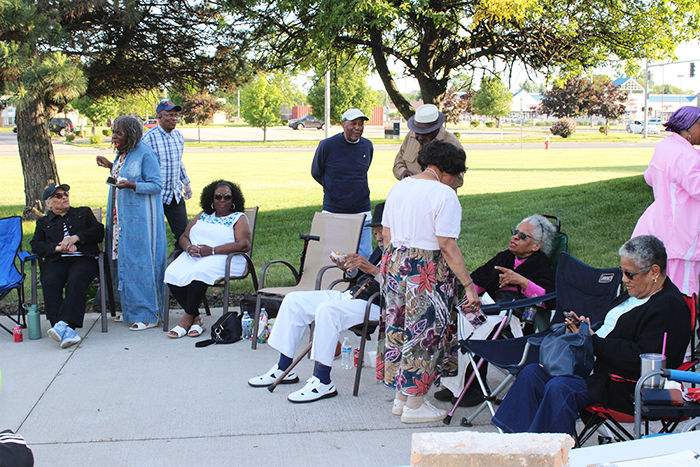
The African American Legacy Project hosted the first First Tuesday of the summer season on Tuesday, June 2 and also released a statement regarding a public records request made to the City of Toledo:
The African American Legacy Project has submitted a formal public records request under Ohio law to the City of Toledo seeking documentation related to the federal Rebuilding American Infrastructure with Sustainability and Equity (RAISE) Grant and the proposed Cultural Trail project.
The request is intended to better understand how the project aligns with the RAISE program’s stated purpose of expanding economic opportunity, improving community connectivity, and addressing the effects of historic disinvestment in target communities.
At the center of the request is a straightforward public question: how will the benefits of this federal infrastructure investment be realized within the communities most affected by decades of disinvestment?
The African American Legacy Project is utilizing the Dorr Street corridor as a key geographic reference point for this inquiry. Dorr Street has historically served as Toledo’s African American business and cultural corridor and remains a relevant area for understanding how equity-focused infrastructure investments translate into community-level outcomes.
The request seeks documentation on project decision-making, community identification, and anticipated benefit evaluation under the RAISE framework, including how funding priorities were established, what alternatives were evaluated, and how project outcomes were defined, measured, and documented.
 For generations, the Dorr Street Business District functioned as a center of African American economic and cultural life in Toledo. It supported Black entrepreneurship, employment, and community wealth-building
before experiencing long-term decline associated with structural economic changes and disinvestment. The organization is using this historical context to help frame questions about how current infrastructure investments are expected to generate measurable local benefit.
The central question guiding this inquiry remains: How will the benefits of the RAISE Grant be realized within the communities that have experienced the greatest levels of historical disinvestment?
The African American Legacy Project emphasizes that the records request is not intended to challenge the value of the Cultural Trail project, but to ensure transparency and public understanding of how federal resources are being allocated and how those decisions align with the equity goals of the RAISE program.
A spokesperson for the organization stated:
“The issue is not whether the Cultural Trail is worthwhile. The issue is whether a federal grant intended to address historic inequities and expand economic opportunity is expected to produce measurable benefits in the communities most affected by those inequities.”
The organization remains committed to constructive engagement with public officials, stakeholders, and residents to ensure that public investments strengthen neighborhoods and contribute to equitable economic development across Toledo.
 What is the RAISE Program?
RAISE (Rebuilding American Infrastructure with Sustainability and Equity) is a federal grant program administered by the U.S. Department of Transportation designed to support infrastructure projects that improve mobility, safety, sustainability, and economic opportunity. A key component of the program is its emphasis on equity and benefits to historically underserved communities.
City of Toledo noted as a RAISE grant recipient in the 2022 FY RAISE award cycle (USDOT announcement) Why was this records request submitted? The African American Legacy Project submitted a public records request under Ohio law to documented for historically disinvested communities. What is being sought? The request seeks records related to: • Grant application materials better understand how RAISE-funded decisions were made and how anticipated benefits are • Equity and community impact analysis • Public engagement documentation • Economic benefit projections • Benefit-cost analysis • Planning studies and corridor maps • Evaluation of alternatives Page 2 of 7 Why Dorr Street?
The African American Legacy Project seeks to better understand:
- How were historically disadvantaged communities identified in the project planning
- How are anticipated benefits defined, measured, and documented?
- What level of direct investment is expected within affected neighborhoods?
- What alternatives were evaluated during project development?
- How does the project contribute to long-term revitalization of historically disinvested corridors such as Dorr Street?
- What documentation supports conclusions regarding expected community outcomes?
Is this an accusation? No. This is a public records request seeking documentation of how decisions were made and how benefits are defined. Does this oppose the Cultural Trail? No. This effort is focused on transparency and understanding of documented outcomes. What is being requested? Grant project. Why is Dorr Street referenced? impacts. Records related to planning, evaluation, equity analysis, and benefit assessment for the RAISE It is a historically significant corridor relevant to understanding equity-based infrastructure