
By Asia Nail
The Truth Reporter
Women of Toledo brings leaders together to examine how policies, businesses and communities can better support working families
More than a celebration, this year’s International Women’s Day luncheon in Toledo became a working conversation about the realities families face every day.
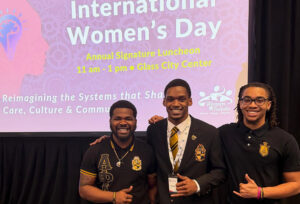
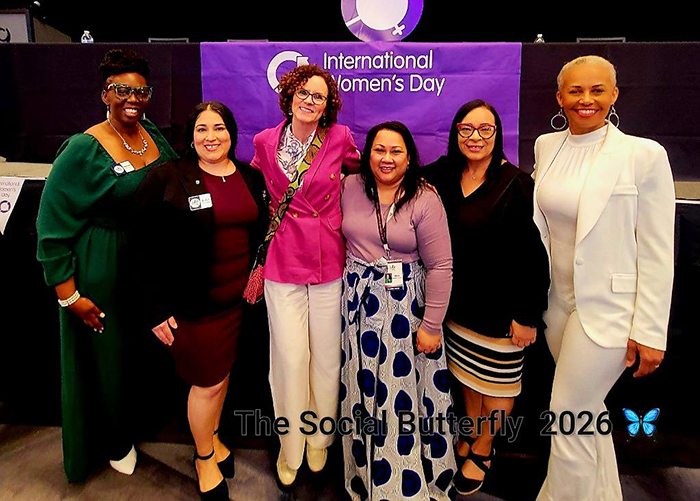
Hosted by Women of Toledo, the annual luncheon drew community leaders, business professionals and advocates to the Glass City Center on March 10. This year’s theme, “Reimagining the Systems that Shape Care, Culture and Community”, invited attendees to take a closer look at something many workers quietly juggle every day: caregiving.
The conversation stretched across industries. Leaders from government, healthcare, law and entrepreneurship shared perspectives on how workplaces and communities can better support people balancing careers while caring for children, aging parents, and other loved ones. One thing stood out from the discussion: for most workers, the demands of home travel with them to the workplace.
A Panel Reflecting the Workforce
The conversation featured a diverse panel of leaders whose professional and personal experiences intersect with the issue.
Panelists included Abby Arnold, deputy mayor for the City of Toledo; Greg Braylock, vice president of strategic integration at ProMedica; Scot Hinshaw of Shumaker, Loop & Kendrick and president of Toledo Rotary; and Navdeep Karamchandani, co-owner and catering director of Balance.
Kristian Brown of 13ABC served as emcee for the afternoon, keeping the program moving. “It’s inspiring to see so many leaders here committed to making care and community part of business strategy,” she said, setting the tone for the discussion.
Entrepreneur and life coach Amy Hall guided the panel discussion. “As we talk about reimagining systems, we have to remember that it’s real people behind every policy and every workplace structure,” Hall reminded the audience early on.
Together, the panelists tackled a range of issues at the center of modern work life: access to childcare, workplace flexibility, talent retention, and the economic realities many families face.
The Realities Behind Workforce Participation
Several speakers emphasized that caregiving responsibilities affect workforce participation across industries.
Arnold noted that while the city government does not control public schools, the health of the school system plays a major role in a city’s ability to attract and retain families.
“We recognize that a strong school system is paramount to a growing population,” Arnold said. “Our role is often to convene conversations and ensure our strategies are aligned to grow the population in the city of Toledo.” She added that employers can also contribute by creating opportunities for young people to build careers locally. Programs that connect students with early work experience can help young residents see a future in the region. “We hope the outcome is that kids in our community see a pathway to stay in our community,” she explained.
Greg Braylock highlighted the business implications of supporting families. “If we’re not offering support for childcare and family needs, we risk losing talented employees to other cities, and that’s a real threat to our businesses,” he said, reinforcing that family-friendly policies are no longer optional perks but essential for attracting and retaining skilled workers.
Navdeep Karamchandani added perspective from entrepreneurship: “Balancing work and caregiving isn’t just a challenge for employees, it’s a chance for businesses to rethink how they operate.”
Scot Hinshaw reminded attendees that systemic solutions require cooperation. “The future of our community depends on employers, nonprofits, and the government working together to support families, no one can do it alone,” he encouraged.
Childcare Remains a Central Challenge
Childcare quickly rose to the top of the conversation. Panelists acknowledged what many parents already know firsthand: when childcare becomes too expensive or simply unavailable, families face impossible choices. For many households, that means one parent steps away from the workforce, and more often than not, it’s the mother.
The impact doesn’t stop at home. Employers feel it too. When parents leave their jobs because care isn’t accessible, businesses lose experienced workers. Recruiting and retaining talent becomes harder, especially in a competitive labor market.
Audience questions even took the conversation beyond U.S. borders. Panelists discussed childcare systems in other countries, like France. While those models differ widely from the American approach, the panel agreed on one point: real progress here will require cooperation between employers, government, and nonprofit partners.
Communities Must Work Together
As economic and political pressures affect organizations nationwide, panelists acknowledged that maintaining progress can feel challenging.
“We’ve got to dig in even more,” Arnold said, referencing ongoing budget pressures and workforce challenges. “In Toledo, nobody else is coming to save us. As a community, we’ve got to hold strong.”
Data Reveals the Scope of the Challenge
After the panel concluded, Wendy Pestrue, president and CEO of the United Way of Greater Toledo, stepped forward with a call to action rooted in data.
Her remarks focused on ALICE households — families who are Asset Limited, Income Constrained and Employed. These households work, often full time, yet still struggle to cover basic needs. In Lucas County, Pestrue noted, roughly 42 percent of families live at or below the ALICE threshold. That means many households are one unexpected expense away from a financial crisis.
“A car repair, a hospitalization, even the cost of medication,” she explained. “Those moments can push families to the edge.”
Women, she added, often carry the heaviest share of that burden. A large percentage of households at the ALICE level are led by women, as most calls seeking childcare assistance come from women looking for help.
To address those needs, United Way has expanded its 211 service, a local hotline that connects residents with resources for housing, food assistance, childcare, and other support.
The organization is also helping convene partners around a childcare initiative known as the Tri-Share model. Under that approach, the cost of childcare is split among families, employers and public funding sources, easing the financial strain on parents. The idea is simple: when families can afford childcare, they are better able to stay employed and maintain financial stability.
Reimagining Systems for the Future
In closing remarks, Nina Corder, executive director of Women of Toledo, reminded attendees that changing systems requires more than conversation. It requires participation.
“The system is not broken,” she said. “It’s just disconnected.”
Closing that gap will take cooperation across sectors, employers, policymakers, nonprofits, and community advocates alike. And, she emphasized, it will also take allies.
“Women cannot do this work alone,” Corder told the audience. “It’s about allyship.”
Moving the Conversation Forward
As the luncheon concluded, the message remained clear: supporting caregivers strengthens families, businesses, and communities alike.
From flexible workplace policies to innovative childcare partnerships, solutions will require coordination between employers, policymakers, and nonprofit organizations. But the first step, many speakers said, is acknowledging the realities families face and committing to build systems that reflect modern life.
International Women’s Day created the space for the conversation. What happens next — in offices, city halls, and community organizations — will determine whether the ideas shared that afternoon grow into the lasting change our communities need.
Learn more about upcoming programs and initiatives from Women of Toledo here.