
 The Truth Staff
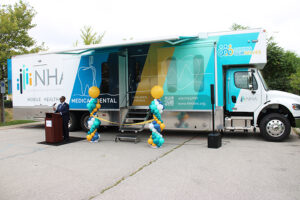
Neighborhood Health Association (NHA) held a ribbon cutting ceremony to announce the official opening of its state-of-the art mobile health unit on Wednesday August 20.
The Neighborhood Health Association (NHA) operates 16 community health centers throughout Lucas County, which offer an array of health care services, three dental clinics, two pharmacies and a number of support services dedicated to providing exceptional healthcare services to all individuals, regardless of their ability to pay.
The ribbon-cutting ceremony marks the culmination of 56 years of dedication and commitment to expanding health care access in the Toledo Lucas County community. The mobile health clinic will travel throughout Lucas County offering medical and dental screenings for children and adults.
NHA’s mobile health clinic will take health care directly to those individuals who face barriers in accessing traditional health care facilities – barriers such as access to the facilities.
Rev. Talmadge Thomas, chair of the board of directors for NHA, spoke of the issue of access as he opened the ribbon cutting ceremony last week.
“Too many appointments are cancelled not because [patients] didn’t want to come but because they didn’t have transportation.” The mobile unit, said Thomas, “will allow dental and medical service to be provided right in the neighborhoods of our patients.”
Toledo City Councilwoman Vanice Williams spoke at the ceremony of the importance of getting such services to the neighborhoods. Williams, who suffered a widow maker heart attack earlier this year, pointed out that NHA has long been “an advocate for people who look like me, people who grew up like me, people who lived in poverty.
The mobile unit, noted Williams, is another example of the way NHA strives to reach the underserved in northwest Ohio communities.
“We continue to look for ways to get to our patients, to provides services,” said NHA’s CEO Doni Miller, about the new mobile health unit. “Our no-show rate for this population of extremely vulnerable people for their medical and dental appointments is very high – for a number of easily understandable reasons. We want to really empower people to save themselves and if that means removing barriers to care, then this helps us do that.”