
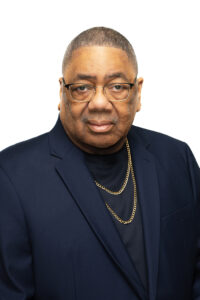
By Rev. Donald L. Perryman, Ph.D.
The Truth Contributor
I choose to believe we’re still in a time of a meritocracy, where merit means something. – Judge Myron Duhart, Ohio Sixth District Court of Appeals
Six years ago, before he won his seat on the appeals court, I sat down with Judge Myron Duhart. This time I asked what looks different.
“What is happening, live and in color, different than 2020 when I went in, is what’s happening every single day,” he said. By any objective standard, due process and the rule of law face more challenges “than any time in recent history.” The last time he can point to a similar era is “the 1960s and the civil rights era.”
A sitting judge doesn’t reach for the civil rights era to make small talk and, from where I sit, you don’t have to look far for what Duhart means. Major news organizations and journalists are in court right now over being barred from the White House and Air Force One.
Duhart didn’t name names. He said only that in 2026 we are having conversations about “what I thought was otherwise settled law.” Ask anybody who lived through the 60s what a settled right is worth.
The Voting Rights Act of 1965 “settled” the ballot after Selma. Yet, 61 years later, the Supreme Court threw out a Louisiana map with two majority-Black districts, and voting rights groups say the Voting Rights Act now protects less than it did.
So, I asked what a judge does with a time like this. His answer? “I choose to believe we’re still in a time of a meritocracy, where merit means something.”
Notice the verb. People who are sure don’t have to choose.
That verb lays a duty on the rest of us. Too many candidates now win office on loyalty to a personality instead of the ability to do the work, and those who pay for it are never the ones with money. This November, with two seats on the Sixth District Court of Appeals up, Toledo gets to say whether it chooses to believe too.
What Merit Looks Like
If we are going to believe in merit, we must check the evidence.
Duhart enlisted in the Army as a private and came out a JAG officer, a military lawyer in the Army’s legal branch tasked to prosecute and defend courts-martial and advise commanders in the law. As a student he clerked for Toledo Municipal Judge Robert Penn, then earned his law degree at the University of Toledo and a master’s in judicial studies at the prestigious Duke University. He has also studied at Harvard’s Kennedy School of Government.
Governor Strickland appointed Duhart to Common Pleas in 2011, and when a justice of the Supreme Court of Ohio stepped aside from a death penalty appeal, the court handed the case to him.
The people who watch him work have also weighed in. Toledo Bar Association polls its members on the qualifications of every judicial candidate on the Nov. 3 ballot, Duhart’s opponent, CJ Kamm, included. Of those members who responded, 77 percent rated Duhart “highly recommended” to serve as a judge, the best showing of any candidate and 15 points ahead of the next highest. Duhart called that “very heartening,” because those are “the very people that frankly know you the best.”
Competence Matters
Voters have to recognize competence when it stands in front of them and prize it above a name or a party label.
Competence is not one thing. It is a list, and the judge who has it can show you every item: “experience, merit, qualifications.” Then there is the item nobody campaigns on, “humility in a time where we don’t see a whole lot of humility,” along with “respect for the rule of law and due process, respect for others.” Add up those qualities and you get the one thing a court cannot function without: trust.
The executive and legislative branches “have the power of the purse, they have the power of the sword. But in the third branch of government, all we have is trust, trust to the people,” Duhart cautioned. “Sometimes, it’s the perception of justice is just as important as actual justice.”
Who needs that belief most? Wealthy persons can hire around a bad judge. A poor or working-class family can’t, and for them the judge is the lawyer, the cavalry and the last hope, all in one robe. Trust is all they have to go on.
So how do you vote on trust?
Look for the judge with a long-standing record in the legal community as well as the greater community, and the integrity to match. Look for fairness, or at least the certainty that anyone who comes into that courtroom knows “they’ll be heard.” A case decided with fairness “goes to the heart of the perception of justice,” and fairness without competence is only good intentions.
Duhart is willing to be measured by it. “I stand on my record,” he says. “I often say if you took my resume and you took my opponent’s resume, it would be a stark difference and a stark deficiency as to my opponent, in all the things that you would necessarily want in a judge.”
Competence is on the ballot, November 3. Choose it.
Contact Rev. Donald Perryman, PhD, at drdlperryman@centerofhopebaptist.org