By Asia Nail
The Truth Reporter
There are some stories that do not begin with degrees. They begin with music.
For Robert L. Perry, PhD, that music was jazz.
Not the kind people politely clap for now. Not background music floating through a restaurant. This was living music. Breathing music. The kind that carried whole lives inside of it.
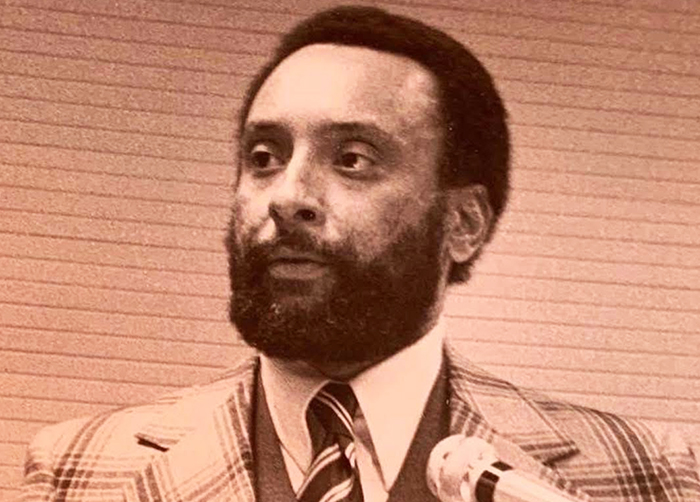
Robert “Bobby” Perry was born in 1932, in Toledo, Ohio, the first generation of his family born in the North, a child of movement, of transition, of hope dressed in uncertainty. His parents, Kathryn Bogan and Rudolph Perry, were just teenagers themselves, 16 and 19, trying to build something steady in a world that rarely offered Black families stability without struggle. When his mother passed away in 1944, his world shifted. But if there is anything Perry’s life teaches, it is this: when the ground moves, you learn how to stand anyway.
He was raised by his grandmother, Ella Wynn Perry.
In her house, the doors did not lock against the world, they opened to it. People came hungry and left fed. Came weary and left seen. There was always room, always another plate, always the unspoken understanding that survival was a collective act. It is from such homes that a certain kind of man emerges, one who cannot ignore injustice because he has known, intimately, what care looks like.
Rhythms of Toledo
Music was everywhere, in the rise and fall of footsteps, in the voices that drifted from open windows, in the heartbeat of the city itself, shaping Perry before he even knew he was listening.
Jazz wasn’t something he chose; it was something that chose him.
His father, Rudolph, knew that world firsthand. A trumpeter, and master jazz musician, he—and his brother, Mozart—were foundational to the Toledo jazz scene.
With his trumpet in his hands and music in his blood, Rudolph Perry carried the city’s rhythms wherever the road led: Michigan, upstate New York, Detroit. Music spoke for him, opened doors, filled rooms, even when it did not always fill his pockets. And like so many Black artists, he navigated the balance between the life music offered and the life it demanded.
His brother followed a different rhythm.
 Mozart Perry had a name that sounded like destiny. He carried the music with him and lived it fully.
“Uncle Mozart drove a motorhome around the country, moving between piano and clarinet like it was second nature,” recalls Robert Perry.
He was the kind of musician other musicians knew. The kind whose name might not be in textbooks but lives in memory, in stories, in the quiet respect of those who understand.
Jazz as Inheritance
Names like Art Tatum were not distant legends. These men were part of the same musical air. Count Basie, Earl Hines, Cab Calloway, Louis Armstrong and many female artists such as Ma Rainey, and Ella Fitzgerald have passed through, leaving their mark in hotel ballrooms, club back rooms and the lively dance halls of Toledo. Local stages hosted trumpet, piano and vocal improvisation, building something in the spaces between notes that history rarely remembers. In that sound, there is a pulse, a proof that jazz is language, and Toledo its conversation.
Robert Perry understood. Because music was not a performance in his life, it was an inheritance.
“Maybe that is where this truth took root: that what is created out of pain must never be surrendered to those who cannot name its cost.”
Sitting with Perry, his words linger like a memory.
Before the titles. Before the honors. Before a university would one day place his name on a building. There was Toledo.
And Toledo was not quiet.
There was movement. Migration. Horns warming up in back rooms. Piano keys telling stories nobody had written down yet. The Great Migration did not move in straight lines. It moved like music. From the South to Kansas City. Chicago. Detroit. And yes, Toledo. Always Toledo.
“History has a habit of skipping steps when it tells our stories. It rushes to New York and calls it the beginning,” Perry remarks.
 “The Harlem Renaissance becomes the headline, as if nothing lived before it.”
But Perry leans forward, even now, and gently corrects the record.
“Toledo was big,” he says. “Not once. Not casually. Big.”
Jazz did not arrive fully formed in New York. It passed through cities like Toledo, picking up stories, pain, style, and soul along the way. Musicians stopped here. Played here. Lived here. Built something here.
Even in Netflix’s Ma Rainey’s Black Bottom, where Chicago takes center stage, Toledo is there. Not announced. Not celebrated outright. But present. A character named Toledo. A quiet nod. A whisper of truth in a loud room.
A city remembered without being fully named.
And that matters.
Because, as Robert Perry makes clear, “what is not named is often what is forgotten.”
The M and M Club. The Waiters and Bellmen’s Club. Murphy’s Place, near the water. The Peacock. Rusty’s. Lucille’s. Rooms where musicians passing through would stop, play, and stay a while longer than planned. Jam sessions that stretched past midnight into something close to morning.
And the city played on, through prohibition, through quiet corruption, through the long American habit of looking away; and the music, indifferent to all of it, told the truth anyway. It told of longing and laughter, of injustice and insistence, of a people who, denied the luxury of forgetting, chose instead to remember out loud.
In that relentless, improvisational act of being, Toledo did what so many cities could not: it raised a generation not just to survive the world as it was, but to imagine, and then demand, something better.
Integrity in Action
Perry went on to serve his country in the Air Force. He monitored oceans for enemy sonar during the wars in Korea and Vietnam, tracking threats that could not be seen, only sensed.
There is a metaphor there, if you are willing to look.
Because long before he became a scholar, Perry was already trained to detect what others ignored, to read what was hidden beneath the surface. To understand that danger is not always loud, and injustice is not always obvious, but both are always present.
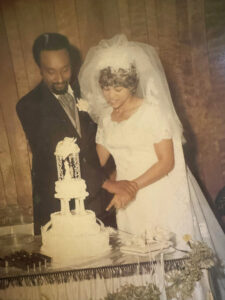
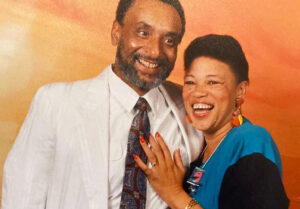
Robert Perry met the love of his life in 1966. Her name is LaRouth. She is a native of Little Rock, Arkansas, a graduate of Fisk University, and a soprano with the famed Fisk Jubilee Singers. Her love for music was matched only by her devotion to family and the English language. By 1969, they were married, beginning a life that would raise three children and nurture entire communities. LaRouth Perry, PhD, had not yet founded the Arts Commission of Greater Toledo or launched the Young Artists at Work program, but even then, the seeds of music, education, and art were quietly taking root.
They moved through life like a jazz composition, sometimes soft, sometimes brassy, but always alive. Together they set the rhythm behind a man whose conscience and career would soon command attention in Toledo and beyond.
And yet, even then, the world was preparing its tests.
For Robert Perry, that moment came in a courtroom in the late 1960s, where he served as one of the first Black juvenile court referees in the region. A Black boy stood before him, guilty of the same crime as a white boy weeks earlier. The expectation was clear, if unspoken: the sentence would not be the same.
It rarely is.
He was told, plainly, to be harsher.
And in that moment, the machinery of America revealed itself, not as abstract theory, but as instruction. Do this. Uphold this. Continue this.
But there are men who understand that survival at the cost of truth is another form of death.
So he resigned.
Not loudly. Not ceremoniously. But definitively.
“I wasn’t going to be an instrument of my own oppression,” he says.
There are those who will call such acts radical. But they are not radical, they are honest. And honesty, in a dishonest system, always appears extreme.
Building a Legacy
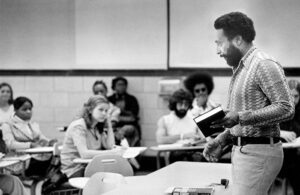
By the time he arrived at Wayne State University to pursue his Ph.D. in sociology, he was no longer a young man trying to find his place, but a man who had already refused the terms of belonging. He would go on to become one of the first Black men to complete a Ph.D. in sociology from that institution.
“I don’t believe in symbolic gestures; that’s just ‘window dressings’ on the set,” explains Dr. Robert Perry. “Essentially, representation without transformation is nothing more than decoration.”
Perry pursued sociology not as an abstraction, but as a necessity. To study society, after all, is to study power: who holds it, who is denied it, and how those arrangements are justified. And he studied during a time when the country itself seemed to be unraveling under the scrutiny of its own myths.
Detroit was burning. The riots in 1967 tore through the city like a reckoning long overdue. Not far away, the Kent State shootings would lay bare the violence of the state against its own children.
But here is what must be understood: these were not interruptions to his education. They were his education.
Because what does it mean to study society while watching it fracture? What does it mean to analyze systems that are actively collapsing around you?
It means you either learn to tell the truth, or you learn to protect the lie.
Robert Perry chose the former.
By then, the music had long since taught him tenacity.
For jazz, at its core, is a discipline of integrity. You may improvise, yes, but you must never betray the truth of the note. You must never play what is false simply because it is expected.
And so, carrying that same insistence into the university, he began to imagine what did not yet exist.
He had seen enough of absence to understand its danger. He had seen classrooms where Black life appeared only as a footnote, where entire cultures were reduced to elective curiosity, where the lived experience of millions was treated as peripheral to the “real” story. And he knew, the way a musician knows when a note is flat, that this could not stand.
The country, meanwhile, stood at a precipice.
Between Protest and Possibility
The late 1960s and early 1970s were not merely years of protest; they were years of reckoning. Students were demanding more than access, they were demanding recognition. Black scholars across the nation were beginning to articulate what had long been felt: that education, if it is to mean anything at all, must tell the truth about the people it claims to serve.
It is here, in this tension, between what was and what could be, that Robert L. Perry took his stand.
Not with noise, but with vision.
Not with spectacle, but with structure.
He would help build something that had not yet been granted legitimacy, something that would challenge not only curriculum but consciousness itself.
But before the doors could open, before the courses could be taught, before the institution could claim what it had once ignored, there would come a moment. A meeting. A presence.
A voice that had already begun to shake the moral foundations of America.
And when that voice arrived in Bowling Green, it would not arrive quietly.
To tell a story like this requires patience. It requires listening. A willingness to let a life unfold in its own rhythm. This is the journey of a movement within a man: jazz as language; justice as choice; education as confrontation; and a legacy that lives, breathes, and moves through his children and all those he has touched.
And still, the story does not rest. It leans forward, because a moment is coming when every lesson, every refusal and every note will become something real, something built, something named, something that will change a university and echo across generations.
What comes next is not just another chapter. It is a beginning: the making of the Ethnic Studies Department at Bowling Green State University, and the voices of colleagues, students, and one unmistakable presence who will give it breath.
The story continues in Part 2. Learn about the leaders of BGSU’s Ethnic Studies Department who transformed education, culture and community.