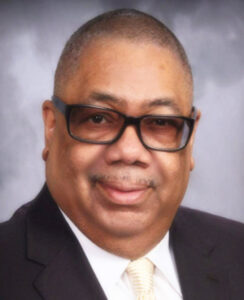
By Rev. Donald L. Perryman, Ph.D.
The Truth Contributor
I have always believed that a strong democracy is not only one that ensures the safety of its people, but also protects their freedom. – Barack Obama
The public beef between Lucas County Sheriff Mike Navarre and Commissioner Pete Gerken over Flock Safety’s license plate cameras, along with uninvited sideline sniping from Lucas County Treasurer Lindsay Webb, raises not just policy questions but deeper issues about leadership, values and how we handle disagreement in public life.
Sheriff Navarre argues that the $250,000 cameras are a critical tool for solving crimes, recovering stolen vehicles and improving law enforcement response by aiding law enforcement with fast, actionable data.
Commissioner Gerken, who initially voted in favor of the cameras, changed course and reversed his decision, citing the long-term consequences of mass surveillance, potential infringements on First Amendment rights and what he described as a lack of public oversight in the deal.
What has followed has been a flurry of press conferences, accusations of retaliation, threats of legal action and growing tension that has led to personal attacks and potential long-term grudges between seasoned public servants. But beneath the surface of what has quickly spiraled into something closer to a political reality drama is something more instructive—something that speaks not only to the facts of the matter but to how we navigate conflict itself.
Here’s the truth: Toledoans want our leaders to protect us without compromising our rights. However, we also expect our government to guard those rights without leaving our communities vulnerable to harm.
And, in this case, both Gerken and Navarre have valid points.
Studies by the RAND Corporation and other scholars affirm that license plate readers can provide investigative leads and significantly improve arrest rates and have been instrumental in Amber Alerts, drug interdictions and violent crime investigations when used under clear policy guidelines. For communities under siege and constantly bombarded by the trauma of poverty and violence, like minority communities, these systems are not unwelcome when appropriately used.
At the same time, policing technologies have historically been misused against minority populations, from facial recognition misidentification to biased deployment of stop-and-frisk. The readers are more often installed in low-income neighborhoods populated by Black and Latino residents.
The Brennan Center for Justice, the Electronic Frontier Foundation, and other researchers have also warned that these systems, left unchecked, can indeed erode privacy, disproportionately impact Black and brown communities, and curtail constitutionally protected behaviors—like attending a protest, community meeting, cultural festival, visiting a clinic or frequenting a house of worship.
So, the disagreement between Gerken and Navarre is not about right or wrong, nor is it a struggle between the principled and the petty. Instead, it reflects how leaders must navigate the tension between security and freedom in a democratic society.
How leaders walk that wire matters just as much as the policies themselves, because in the end, the issue is not whether we should prioritize safety or privacy—it’s how we hold onto both without losing either.
To their credit, both men have signaled some willingness to de-escalate the drama. Gerken has called for a private meeting. Navarre has expressed his openness to sit down and talk. That is not weakness—it’s “grown-man” leadership. That’s not backing down—it is statesmanship. It is two elected officials “standing on business” for their convictions.
What is really at stake is whether we can engage in principled debate in a way that honors the public, preserves dignity and refuses to let our differences consume our democracy and relationships.
Contact Rev. Donald Perryman, PhD, at drdlperryman@centerofhopebaptist.org