
By Asia Nail
The Truth Reporter
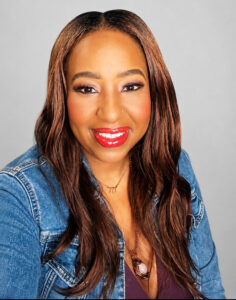
Rhonda Sewell’s lifetime recognition from the Association for Ethnic Studies honors a career spent amplifying culture, challenging omissions and making room for the people whose history too often lives outside the frame.
The Door That Stayed Open
Every family has an album. Inside, somebody stands proudly in their Sunday best. A child grins with a missing tooth. An elder carries stories no photograph could ever hold.
But what happens when someone tears out the pages? When a child opens the album and cannot find the people who helped make the family whole?
That question lives at the heart of Ethnic Studies. It also runs through the career of Rhonda Sewell, a journalist, educator and cultural advocate whose work has helped communities see themselves in the stories institutions tell.
This October, the Association for Ethnic Studies (AES) will honor Sewell with a lifetime recognition award during its 53rd annual conference in Los Angeles, Oct. 15–17. The recognition celebrates her commitment to Ethnic Studies and her career-long work advancing diversity, equity, inclusion and belonging.
For Sewell, the honor feels deeply personal. It arrives in a season when she is reflecting on the life she has built and the impact she has made.
“You know, when you reach a certain stage in life, you start to reflect on what you’ve done,” she says, considering the impact she has made on her family, herself and the world around her. She sees moments of recognition as an “indication that God is smiling upon you.”
When Ravi K. Perry, PhD, called to tell her about the award, she never expected the conversation to be about her.
“I was in shock,” she recalls.
Then came the tears, the gratitude and the feeling that the moment carried a message from our Creator. After years of doing the work without seeking applause, she received a reminder that her efforts had opened doors and left a mark.
Who Gets to Tell the Story?
A photograph can show who stood in the room. It cannot explain who was allowed inside.
Who decides which histories children learn? Whose art hangs on museum walls? Who gets remembered as a builder of this country, and who survives only in family stories?
In the mid-1990s, while reporting for The Blade, Sewell accepted an invitation from Robert L. Perry, PhD, and John S. Scott, PhD, to teach at Bowling Green State University. She designed a course called “Mass Media and Ethnic Groups: From the 1800s to the Present Day.”
She had never taught a class before. Her mentors saw something in her that she had not yet discovered in herself.
“They were like, “Rhonda, you have the chops to do this,’” she remembers.
Sewell brought journalism research and curiosity into the classroom, mixing films, presentations and discussion. She wanted students to participate, not sit silently while someone delivered information from the front of the room.
“Young people want to feel something in these courses and they want to be heard,” she says.
That belief extended beyond teaching. The media can describe a community every day and still fail to understand it. Its struggles may make headlines while its brilliance goes unmentioned.
Sewell wanted to help tell a complete story.
The Curriculum Is a Time Machine
Education can carry us backward, but it should never leave us stranded there.
Sewell entered a tradition built by people who challenged the limits of conventional education. Robert Perry is a distinguished member and prominent leader of AES. Perry and Scott, alongside student activists, established Ohio’s first Ethnic Studies program at BGSU in 1970.
Their work insisted that students deserved more than a narrow account of history.
Sewell still marvels at what those educators accomplished, including bringing James Baldwin to BGSU’s campus. She describes Perry and Scott as visionaries who trusted younger professionals to carry their work forward.
“They were passing the torch on to me and others like me,” she says.
That history makes her recognition especially meaningful. Ravi Perry, Robert Perry’s son, selected Sewell for the honor decades after his father and Scott opened the classroom door for her.
For Sewell, the connection is more than coincidence. It is a full-circle moment, one that links the people who gave her an opportunity with the person she became because they did.
Ethnic Studies examines how culture, identity, race and power shape human experience. It challenges students to look beyond the familiar version of history and recognize the people whose contributions have gone unacknowledged.
A fuller history does not diminish anyone. It gives us a more honest picture of the world we share.
The Museum Is a Mirror
A museum invites people to look at art. But what happens when visitors struggle to find themselves reflected in what they see?
Sewell has carried that question into her work at the Toledo Lucas County Public Library and the Toledo Museum of Art. At the library, she advocated for public funding and literacy. At the museum, she served as its inaugural Director of Belonging and Community Engagement before becoming Director of Advocacy and External Affairs.
She often approaches institutional decisions with a deceptively simple question: Have we asked the community?
That question can change a conversation. Leaders may create elaborate plans without consulting the people those plans are meant to serve. They can talk about belonging while overlooking the voices that could help them understand what belonging requires.
Sewell describes her calling plainly: “I call myself a culture amplifier.”
The phrase fits her work. She wants stories to travel farther and reach people who might otherwise never encounter them.
The Toledo Museum of Art is preparing a reimagined installation expected to open in 2027. The presentation will arrange art chronologically while drawing connections among artists and countries, including Pablo Picasso and Kehinde Wiley.
Art does not exist in a sealed room. Instead, artists respond to the world around them, building on influences that cross borders and generations. A museum can help visitors see those relationships, but it must remain willing to tell a wider story.
The People Who Build the Bridge
A bridge matters because someone else can cross it.
Sewell knows this from experience. Her own career changed because two educators trusted her with an opportunity she had never imagined pursuing.
This year, Toledo will bring its own voices and legacy to the AES conference. Jon-Jama Scott, son of John S. Scott, will present “Black Spirit,” carrying forward a connection to the Ethnic Studies movement that helped shape his father’s work. His presence adds a personal dimension to a conference rooted in the people who fought to make Ethnic Studies a recognized and valued field of study. Jennifer Lewis will make her conference debut with “Navigating Cultural Tensions in Legacy Brands,” bringing another Toledo perspective to conversations about culture, identity and representation.
Their participation carries the work into the next generation.
Sewell and her mentors did not always stand on equal ground. They occupied different places in their lives and careers. But Perry and Scott recognized her potential and gave her room to grow.
She has never forgotten that gift.
“They changed the trajectory of my life,” she says of the elders who opened doors for her.
Their example taught her that leadership means more than collecting opportunities. It means creating them for someone else.
A Gathering of Voices, A Legacy of Truth
The Association for Ethnic Studies’ 53rd annual conference will bring together scholars, educators and cultural leaders whose work challenges us to look more closely at the stories history preserves and the voices it leaves at the margins. Featured scholars include Christine Sleeter, PhD, internationally recognized for her work in multicultural education and critical pedagogy, alongside Verónica X. Valadez and Gabriel A. Orosco, whose work connects Indigenous philosophies with community-based teaching.
Conference leadership and programming will draw on the expertise of faculty and scholars including Ezekiel Joubert III, PhD; LaShonda Carter, PhD; Deborah Brown, PhD; Robert De’Von Jiles, PhD, and Professor Francisco Najera. Across the program, presenters will explore the intersections of Black identity, feminism, artistic recognition, cultural memory and healing.
Jon-Jama Scott’s “Black Spirit,” will be presented alongside scholars examining Black women columnists, the recognition of Black American artistic contributions and the reclamation of plantation sites, reflecting the conference’s broader commitment to asking whose histories are honored and how communities can reclaim the power to tell their own stories.
Under the theme “For the People: A Loving Defense for Ethnic Studies,” the gathering is more than an exchange of academic ideas. It is a defense of the right to remember, to question and to see our communities reflected in the histories we pass forward.
The Vocabulary of Belonging
Belonging means more than being allowed into a room. It means knowing your presence matters once you arrive.
There is power in being seen, and just as much power in being remembered. In journalism, that means seeing a community represented beyond its worst day. In a library, it can mean finding the resources that help a child imagine their future. In a museum, it may mean standing before a work of art and recognizing something of yourself.
Sewell brings a social justice lens to her work, but she does not pretend change happens automatically. As she continues building relationships inside some of Toledo’s most influential institutions, she’s learned how to advocate from within.
“I have a social justice spirit,” she explains. “That’s just who I am.”
Her approach is persistent. When she sees something that is not right, she wants to know what can be done to change it.
That work begins with listening. It requires institutions to recognize that communities hold knowledge beyond their own offices and that people deserve a voice in the stories told about them.
Sixty Years, One Unfinished Conversation
At 60, Sewell is looking backward with gratitude and forward with curiosity. She has spent decades reporting, teaching and advocating. Now she is thinking about what comes next.
Her generation, she believes, has reached a moment of responsibility.
“We have to now pass the baton and the torch,” she says.
As new doors open for Sewell, she often holds them open for someone else, recommending the next chapter of leaders for board seats instead of taking every opportunity for herself.
“Have you considered this person?” she asks.
That question is another way of lighting the way.
She understands that the work cannot depend on one generation forever. The people who once made room for her showed her how to do the same for others.
Still, the future can feel uncertain. Sewell has described being in transition, weighing difficult choices and trusting God to order her steps. Somewhere in the pages ahead, she hopes to write and publish a book of her own.
She may not have every answer yet, but she carries faith, experience and the freedom to decide what comes next.
Sometimes that is enough to begin.
The History We Carry Into the Future
Imagine a child opening the family album years from now.
The pages hold evidence of struggle, creativity and love. They show people who made a way when the road narrowed, elders who protected their stories and ordinary people whose choices shaped lives beyond their own.
That child deserves the whole album.
Sewell’s lifetime recognition celebrates a career spent keeping those pages from disappearing. Her work reminds us that history is not simply what happened. It is also what we choose to preserve and what we allow the next generation to believe about itself.
The AES conference theme, “For the People: A Loving Defense for Ethnic Studies,” makes a powerful distinction. Love does not require us to ignore what is broken. Sometimes love is precisely why we refuse to look away.
For decades, Sewell has helped bring overlooked voices into view. Now the field she helped serve has turned toward her and acknowledged the difference she has made.
The album is not complete. There are still names to speak, photographs to take and blank pages waiting for someone brave enough to fill them.
Rhonda Sewell knows what it means when someone believes in you before you fully believe in yourself. She has lived the difference one open door can make.
Now she is helping others find their way through.
Somewhere, a young person is waiting to see their reflection in a story, to discover that their voice belongs in the room, that their history belongs on the record, that their dreams deserve a place in the world.
Perhaps that is how we change the picture. One story preserved. One voice amplified. One door opened wide enough for someone else to walk through.
And one day, they will turn around and do the same.
Explore the Association for Ethnic Studies 53rd annual conference, “For the People: A Loving Defense for Ethnic Studies,” bringing together scholars, educators and cultural advocates to preserve cultural memory, challenge historical omissions and amplify the voices that shape our collective story.