 By Dawn Scotland
The Truth Reporter
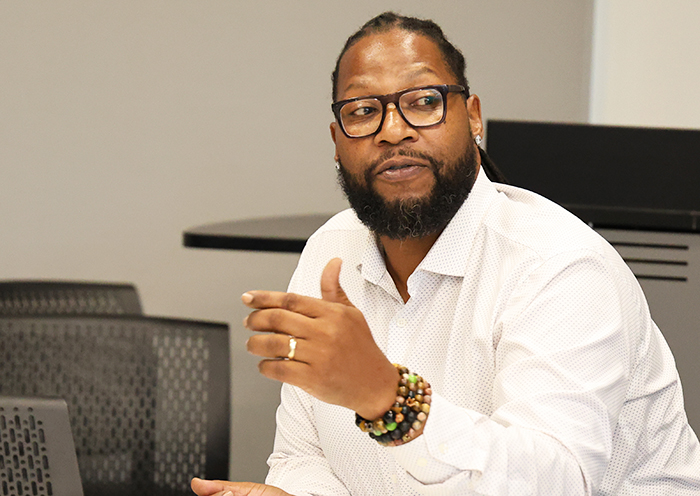
Community Activist Sharmayne Ivey opened a Community Knowledge Exchange Series at Mott Branch Library Monday, July 27 from 4-8 p.m. The event, which is part one of the series, focused on The School to Prison Pipeline particularly addressing suspensions and referrals within the school system.
The event, that was open to all, offered free dinner to the community and included a two-part discussion. The first part covering ‘Current Events, Conflicts, and Conspiracy Theories’ and the latter ‘The State of Education: Local, State, and Federal.’
The school-to-prison pipeline refers to school discipline practices, such as suspensions and referrals to law enforcement, that funnel youth out of public education and into the juvenile and criminal legal systems.(source: aclu.org/)
According the American Civil Liberties Union, “From inadequate resources for counseling to an overreliance on school-based police officers to enforce harsh zero-tolerance policies, many students — overwhelmingly students of color and students with disabilities — are isolated, punished, and pushed out of our education system for adolescent mistakes.”
According to that same source:
- Students of color and students with disabilities are nationally two times more likely to be referred to police and arrested in schools than other students.
- In 2017-18, Black students accounted for 28.7 percent of all students referred to law enforcement and 31.6 percent of all students arrested at school or during a school-related activity — twice their share of total student enrollment of 15.1 percent.
- In 2017-18, 55 percent of high school students attended school with police presence, while only 40 percent of high school students attended school with school social worker. .(source: aclu.org/)
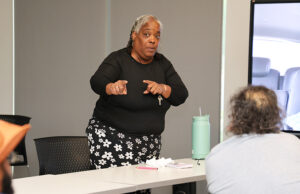 The event discussed the correlation between current school policies and the influx of Black youth into the prison system and also highlighted the climate of today’s schools and mass exodus of teachers.
In Toledo, Ivey suggests that school suspensions and behavioral referrals are often used as classroom management tools for behavior and overcrowding. Furthermore, she states, these K-12 disciplinary records can prevent Toledo high school graduates from serving their own communities knowing that the Toledo Police Academy heavily weighs suspensions and referrals during admissions.
The evening was attended by local leadership, community members and parents. Those present shared personal stories from their involvement with youth, discussed current leadership and practices in Toledo and solutions to improve and revitalize the community.
Topics included but were not limited to the breakdown of the family, the role of the modern church, the role of Black males, media representation, prison labor and more.
Sharmayne Ivey is a Community (Common Unity) Activist, Social (American) Systems Scientist in Toledo, Ohio; specializing in the areas of Education, Employment, Recreation, Transportation, Housing and Toledo, Ohio Native. Ivey has voluntarily served the City of Toledo since June 2015, committing to attending meetings that others could not prioritize.
After graduating from Madonna University School of Social Work; Ivey conducted unorthodox parallel research alongside Dr. Lynne Hamer (University of Toledo-Department of Education), becoming informed of the gross and harmful effects of the school to prison pipeline. In 2016, Ivey submitted 14 charges against Toledo Public Schools for generational harm via suspension and referral, generationally. Ivey was essential in the 2021 TARTA Levy passage, working alongside Toledo City Council and TARTA Board Members, successfully restoring 7-day public transportation services.
Ivey has overcome years of challenges including professional and financial harm in the pursuit of truth – Why is Toledo Declining?