
 By Asia Nail
The Truth Reporter
Transformation does not always announce itself.
Sometimes it hums first, low, uncertain, like a bassline searching for its place. Then, when enough people have listened long enough, it rises. It gathers breath. It becomes undeniable.
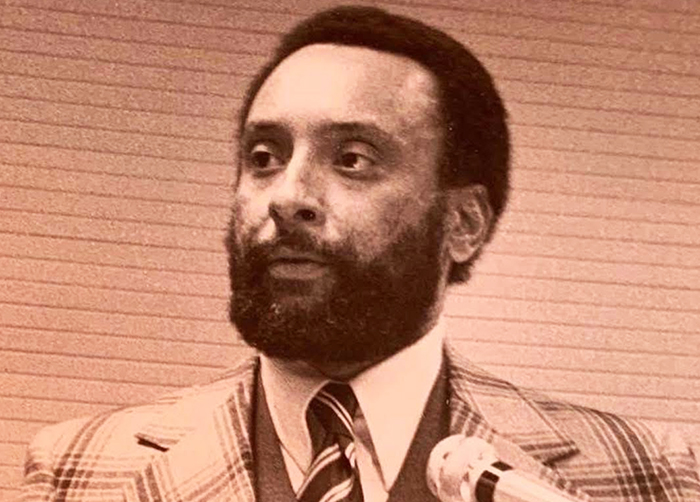
For Robert L. Perry, PhD, that rising came in 1970, not as an invitation, but as a necessity.
America was restless. The Vietnam War stretched on like a wound that refused to close. Campuses pulsed with dissent. And after the Kent State shootings, the illusion that education existed apart from violence could no longer be maintained.
At Bowling Green State University, students gathered not simply to protest, but to insist that education must speak to their lives, or it is not education at all.
“I got a call,” Perry remembers. “They were having protests… students wanted a curriculum related to their lived experiences.”
What they wanted was recognition.
What they received, though few could have named it then, was transformation.
Student Fire: The Movement Before the Department
In April 1970, the Black Student Union (BSU), led by Robert Horne and its executive council, delivered a list of demands that would reshape the university’s moral and academic landscape. They called for Black faculty and administrators, a Black Studies curriculum, increased Black student enrollment to 10 percent, financial support for student organizations, cultural representation in campus life and spaces where Black students could gather, belong and breathe fully inside the institution.
These were not symbolic requests. They were structural demands for life inside a system that had historically treated Black presence as optional.
Among their priorities was the creation of scholarships for Black students, a Black student newspaper—The Obsidian, which would later become a sustained publication—and institutional accountability for recruitment and discrimination practices.
What emerged from this pressure was not simply a program, but a philosophy: that representation without transformation is decoration.
A Curriculum That Refused to Lie
It is one thing to be invited into a room.
It is another thing entirely to rearrange the furniture.
When Robert Perry arrived, Ethnic Studies was not yet a discipline. It was a gesture. A center. A temporary accommodation to unrest, designed, perhaps, to quiet the noise without altering the structure.
But Perry had lived too long and seen too much, to confuse quiet with justice.
What many did not expect was how he anchored those commitments in academic life itself, tying them not only to practice, but to coursework, institutional frameworks, and the pursuit of degrees.
In that decision lies a kind of courage that rarely announces itself. Because institutions can tolerate conversations.
They struggle to tolerate change.
“I don’t believe in symbolic gestures,” Dr. Perry says, his voice carrying no trace of bitterness, only clarity. “Representation without transformation is decoration.”
And so he did not decorate.
He built.
Between 1970 and 1978, what began as a temporary center became an Ethnic Studies program, and finally, a historic Ethnic Studies Department, rooted not in sentiment, but in structure. Not in permission, but in insistence.
Perry understood what many still resist understanding: knowledge that threatens power is not distributed, it is restricted.
Building the Architecture: Ethnic Studies as Action
Out of this knowledge grew one of the most distinctive Ethnic Studies programs in the country, built not only in classrooms, but in community spaces, homes, bars, churches, and cultural centers like the Frederick Douglass Community Association in Toledo.
Projects like Project Search, led by John Scott, PhD, a playwright of culture and an early architect of Ethnic Studies thought, alongside researchers Robert Horne and Clarence Daniels, surveyed campus life to measure support for Black students and faculty. It was both research and revelation, exposing the gap between institutional language and real life experience.
The early Ethnic Studies movement at BGSU was never confined to academia. It was movement work. Meetings happened wherever people could gather truthfully. Faculty and students collaborated across city and campus lines, producing a model of scholarship rooted in engagement rather than detachment.
Even entertainment was intentional. Cultural programming brought jazz musicians, theater artists, and national intellectuals into the same space. Jazz names like Les McCann and Ramsey Lewis moved through the imagination like memory made audible, while the intellectual and political fire of figures such as Stokely Carmichael, Cornel West and Toni Cade Bambara lingered in the same atmosphere of inquiry. The line between cultural performance and political education, blurred by design.
As Perry often emphasized, Ethnic Studies was never simply about inclusion. It was about restructuring what counts as knowledge.
When James Baldwin Took a Seat at the Table
Every now and then, a voice enters a space and rearranges its gravity.
In 1976, that voice belonged to James Baldwin.
He came, at first, as many great men do, briefly, cautiously, called by invitation and curiosity alike. A lecture. A single appearance. A moment.
But something in Bowling Green spoke back.
“Dr. Ernest Champion, a professor and founding member within the Department of Ethnic Studies, first invited Baldwin to deliver a lecture,” Perry recalls. “Then he came back… again and again.”
From 1976 to 1981, Baldwin returned as an educator. He taught in the evenings, when the day’s noise had quieted and truth could be heard more clearly. The university adjusted itself to his rhythm, a small but telling reversal. Because Baldwin, like jazz, refused confinement.
He stayed not in isolation, but in community. In homes. In rooms where conversation moved without script. In those spaces, his presence carried the weight of what he had already written in The Fire Next Time: “Not everything that is faced can be changed, but nothing can be changed until it is faced.” At Bowling Green, that facing was not abstract, it was immediate, spoken across tables and classrooms where students were no longer observers of history, but participants in its questioning.
And still, he widened the demand beyond intellect into something more human, more dangerous, more necessary, what it means to remain open in a world trained to close you. “Love takes off the masks we fear we cannot live without and know we cannot live within,” he wrote, and in that spirit his classroom at Bowling Green became less a lecture hall than a mirror held up to a country still learning how to see itself without flinching.
History, in those moments, was no longer something students studied. It was something they encountered.
And perhaps that is the most radical thing of all.
Knowledge Must Do Something
There are philosophies that decorate walls. And there are philosophies that move people. Robert Perry belonged to the latter.
“Education for the beauty of it is not enough,” he says. “It has to do something.”
He repeats it, with the knowing that repetition might make it harder to ignore:
Knowledge must do something to make things better.
And so he taught not only theory, but application. Not only history, but responsibility.
He brought the community into the classroom and the classroom into the community.
He invited students into hiring decisions, not because they were experts, but because they were stakeholders.
“Students need to feel they have input,” he insisted.
This was not a ‘how-to’ as performance. This was education as participation.
And in that participation, something rare took place: Students did not simply receive knowledge.
They recognized themselves within it.
A House Full of Voices
There are institutions, and then there are living rooms.
Dr. Perry understood the difference.
Over the years, voices passed through the Ethnic Studies program like a procession of witnesses:
Maya Angelou, whose words could lift grief into song.
Cornel West, whose questions refused to settle.
Kwame Ture, whose voice carried the urgency of a people unwilling to wait.
Nikki Giovanni, whose poetry held both fire and tenderness in the same breath.
Danny Glover, whose presence blurred the line between art and action.
Johnnetta Cole, whose scholarship carried the weight of lived truth.
Even Yolanda King and Attallah Shabazz—daughters of Martin Luther King Jr. and Malcolm X—appeared together at BGSU in 1984 through their theater project Nucleus, embodying the possibility of dialogue across historical fracture.
These were not events. They were encounters with history still speaking.
LaRouth, Baldwin and the Architecture of Belonging
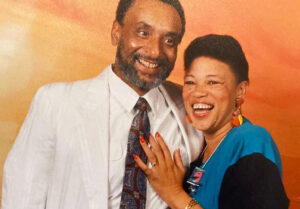
At the center of everything that would later become university, lectures, national conferences, and the language of departments and disciplines, there is Perry’s wife, LaRouth.
LaRouth Perry, PhD, is the quiet architecture beneath the visible structure of a life that would later be named, studied, and archived. A scholar in her own right, earning her PhD in American Culture Studies from Bowling Green State University, she carried the work of language and education into classrooms across Toledo. She taught high school English in Toledo Public Schools and Africana Studies at the University of Toledo. She also worked in programs like Upward Bound and Toledo Excel, where she helped shape the minds of students who were often told, subtly or directly, that their futures were conditional.
But she taught otherwise.
She taught that futures are built, not granted.
Alongside Dr. Robert Perry, she raised a household where intellect was not abstract, but daily practice.
Their home in Westmoreland, near the University of Toledo, became more than a residence. It became a gathering space where ideas arrived with their coats still on, where artists, community leaders, and scholars moved through rooms that refused to separate the academic from the human. Beyond the campus itself, James Baldwin found another kind of refuge. The Perry home became his second home, one where conversation stretched late into the night, and music, philosophy, and laughter braided together without pretense.
There, Toledo revealed itself differently to him. It was a living Black cultural ecosystem that was intimate, intelligent, and unforced. Community was practiced in real time. In that house, the boundaries between lecture and life, writer and neighbor, thinker and friend quietly dissolved. Baldwin could simply be among people who understood that the work of understanding is also the work of belonging.
The measure of Robert Perry’s work was never proximity to fame.
It was proximity to possibility.
“My children always joke,” Perry says, smiling at the memory, “they’d go downstairs and it’s like… hey, Auntie Angelou or Uncle Baldwin.”
What a salutation.
What a world.
To grow up where greatness is not distant, but domestic. Where brilliance sits at the table and asks if you’ve eaten.
The Institutional Breakthrough: Curriculum as Transformation
In 1993, under Dr. Robert L. Perry’s leadership, Bowling Green State University made a historic curricular shift: every student was required to complete a course in Ethnic Studies.
This was not symbolic policy. It was structural change embedded into the academic core of the university.
That requirement reframed what it meant to graduate. Students could no longer move through the institution without encountering questions of race, power, history, and identity. Education, in Perry’s framing, was not preparation for earning a living, it was preparation for understanding life itself.
This philosophy echoed W.E.B. Du Bois, who wrote that the purpose of education is not merely “earning a living,” but learning how to live, because “the man who spends his life earning a living has never lived.”
At BGSU, Ethnic Studies became the space where that idea was made an institutional reality.
Conferences, Coalitions and National Influence
Robert Perry’s influence extended far beyond Bowling Green through his leadership in the National Association for Ethnic Studies (NAES), later known as the Association for Ethnic Studies (AES).
He served on the NAES Executive Council, chaired sessions, and regularly presented scholarships alongside BGSU colleagues Ernest Champion, PhD; Alice A. Tait, PhD, and Melvin T. Peters. Together, they helped shape national conversations on curriculum, race, and institutional transformation.
NAES conferences during this era focused on themes such as:
- race, class, and gender
- institutionalizing Ethnic Studies
- multicultural curriculum development
- global and comparative ethnic frameworks
In 1994, at the NAES conference in Kansas City, Robert L. Perry received the Charles C. Irby Distinguished Service Award, honoring his leadership in building Ethnic Studies as both discipline and movement.
These conferences were not academic formalities. They were intellectual assemblies where scholars, activists, and students debated what education should be in a society still defining democracy for itself.
What Endures When Everything Else Is Threatened
Time has a way of testing what we build.
In recent years, ethnic and multicultural programs have found themselves under scrutiny, underfunded, or erased altogether. Across Ohio and beyond, the language of diversity has been both politicized and pared down.
And yet, at Bowling Green, Ethnic Studies remains.
Not untouched.
But standing.
Why?
Because Perry did not build a moment.
He built a structure.
Departments endure where programs disappear. Tenure protects where trends shift. Requirements ensure relevance where interest may wane.
The Shape of a Legacy
If you wish to understand the reach of a life, you must look not only at what was built, but at what continues to build.
His children—Baye, Kai and Ravi—are not shadows of his work.
They are its evolution.
Baye, the eldest son and a graduate of Bowling Green State University, moves through the world with the instinct of a builder and the ear of a musician. An award-winning hospitality executive, he has conceived and managed multiple establishments in Toledo, Ohio, and Tampa, Florida, shaping spaces where people gather, eat, listen, and remember themselves. He turns ideas into rooms alive with light and sound. Now, he is imagining, somewhere in Florida, a speakeasy that will no doubt carry a quiet whisper of the old Dorr Street rhythm in its walls.
Kai, their only daughter, turned inward, toward the delicate architecture of identity, dedicating her life to understanding how Black children come to know themselves in a world that too often refuses to see them clearly. Conducting educational research at Yale, she has served as a Research Assistant, Program Manager and now Transition Counselor while pursuing a doctorate in educational psychology. An adjunct professor of multicultural education and president of The Amistad Committee, Inc., she is also developing an op-ed series exploring Black identity through her lived experience as a swimmer and sailor.
And Ravi, the youngest son and scholar-activist, writes and studies power itself—how it moves, how it disguises itself, and how it might be bent toward justice. Situated within Black politics, minority representation, urban politics, American public policy, and LGBTQ communities of color, his work carries him from classrooms in Mississippi to Washington, D.C., where he serves as Chair and professor of Political Science at Howard University, carrying forward the intellectual and moral labor of naming what America is, and what it has not yet dared to become.
They are not repeating their father’s story. They are continuing it, in their own language.
A Final Note That Still Resonates
At Bowling Green State University, the Dr. Robert L. Perry Veranda, located at Shatzel Hall, now bears his name, a quiet but enduring tribute to a life that insisted education be both honest and humane. It is more than a marker. It is a threshold. A place meant for gathering, reflection, and conversation, much like the spaces he created throughout his career.
At 92, Robert Perry does not speak of legacy as something abstract. He speaks of people. Of former students, now grown, returning with stories of lives shaped, paths redirected, possibilities realized. “That what you did mattered,” they tell him. And he listens, not as a man surprised, but as a man who understood, all along, what the work required.
“I feel like I was doing what I was raised to do, to be of service to others,” he says. “To get up every day and do my best.”
There is a pause there. Not empty, but full. And then, simply:
“I’m satisfied.”
It is not a boast. It is not an ending. It is something closer to a final note held just long enough to remind you that the music was real, that it happened, that it changed the world.
And if you are listening carefully, you realize, it’s still playing.
Learn about the leaders of BGSU’s Ethnic Studies Department who transformed education, culture, and community.