

By Rev. Donald L. Perryman, Ph.D.
The Truth Contributor
If a man does not keep pace with his companions, perhaps it is because he hears a different drummer. Let him step to the music which he hears, however measured or far away. – Henry David Thoreau
America has always had a complicated relationship with people who refuse to march in step.
Our nation loves a bootstrap story, for instance, right up until the boots belong to a Black man or woman walking somewhere the script didn’t call for them to go.
Joshua Williams heard a different drummer: a Black man, who grew up in inner-city Toledo, slept on park benches as a teenager, and eventually found his way to the Ohio Statehouse as a Republican. Neither party quite knew what to do with him when he got there, refusing the stereotypical roles both parties had already cast for him.
Williams arrived in Columbus in 2023 as the first Black Republican elected to the Ohio House in 50 years and, eventually, the first Black Majority Whip in state history. He then ran for Congress, losing in the May 2026 GOP primary. He will now leave the Ohio Legislature in January.
Where Have All the Black Republicans Gone?
Yet, that is not just an Ohio story. All four Black Republican lawmakers currently serving in the U.S. House of Representatives are also expected to leave by January 2027. Few Black Republicans are running for Congress this cycle, and none are regarded as likely to win. Senator Tim Scott of South Carolina will then stand as the Only Black Republican on Capitol Hill.
Which raises the question that Josh Williams’ political life puts on the table: Is there room in American politics for a Black man or woman who refuses to be what either party needs them to be? Or, does the system — ultimate demand that you fit the mold or find the door?
I sat down with Williams, his wounds still fresh in the aftermath of his primary loss to Derek Merrin for the right to face Marcy Kaptur in the November general election for U.S. District 9.
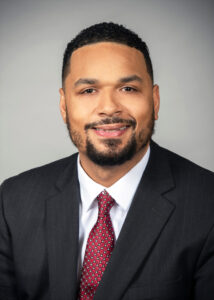
Here is our conversation.
Perryman: Were you surprised by the result, or did you see it coming?
Williams: I was disappointed in the results.
Perryman: What did it teach you about the appetite of your GOP base?
Williams: That they’re hoping to block representation. In new portions of the district where my opponent didn’t have name ID I performed very well, including in Paulding County, where I received an overwhelming number of votes, indicating that the GOP base is not concerned with the race of the candidate, it’s more about name recognition and making sure that you have the funds to be able to get your message across to voters, and we weren’t able to do that in the election cycle.
Perryman: Was it your strategy, or what was it that contributed most to your second-place finish?
Williams: Fundraising.
Perryman: Did the National GOP establishment show up for you?
Williams: They definitely were supportive, but they didn’t endorse or weigh in on our race. The local elected officials absolutely showed up for me. I earned over 100 endorsements in my congressional race, but my opponent had name recognition from his prior congressional race, and I wasn’t able to overcome without adequate funding.
Perryman: Did you have any issues where you were treated with racial animus during your time?
Williams: Absolutely, by Democrats.
Perryman: Not by your own party?
Williams: Absolutely not. I never once had any racial animus from my own party. If anything, they were supportive; they were disappointed that I’m not going to be in the House, and they have encouraged me to run in the future. But members of the minority party, the Democrats, hate my candidacy as a Black conservative because they want a monopoly on Black voices. The only racial animus I ever received was from white liberals within the House of Representatives.
Perryman: How did your relationship with Democrats evolve over time?
Williams: In the beginning, they didn’t know how to take me. They didn’t know what my role would be within the Republican Party, but then they saw that I was introducing bipartisan legislation they could get behind. It’s not about getting wins or losses for a political party; it’s about getting wins or losses for your constituents, which means I represent both Democrats, Republicans, Independents and third-party members. I prided myself on being able to set politics aside and focus on policy.
Perryman: Is there anything you are most proud of?
Williams: I’m most proud of being able to bring Black representation within the GOP party and showing that there is a place for minorities within both political parties, not just the Democrats.
Perryman: Do you feel like you moved the needle at all on how the Ohio GOP thinks about Black constituents and Black communities?
Williams: Absolutely. By being in the room and engaging in discussions, people were able to hear conservative positions articulated in a way that makes sense to minority communities. When I was able to have conversations with minorities, regardless of whether it was a Black individual, an Indian individual, or a Latino individual, we just talked about issues that affected them every day. The price of gas, how much taxes they had, property taxes, school funding, community safety — that’s an issue that resonated with them. In general elections, you saw nontraditional Republican voters swing my way, and I outperformed almost every Republican on the ballot in my second House race.
Perryman: What does the morning of January 1st look like for Josh Williams?
Williams: Waking up and going to work. January 1, 2027, will just mean that, at that time, I lose the title of State Representative, but that’s not the most important title in my life. I’m first always a follower of Christ; second, I’m a husband and a father; third, I’m a lawyer. I’m still going to be the same man, just without a title in front of my name.
Perryman: Alright, thank you very much for your time, and God be with you going forward.
Williams: By the way, did you see me introduce the Sojourner Truth Bill? It would recognize Sojourner Truth Day here in the State of Ohio.
Contact Rev. Donald Perryman, PhD, at drdlperryman@centerofhopebaptist.org