

 By Asia Nail
The Truth Reporter
Before there was a funeral home in Toledo, there was a grocery store in Mississippi. Michael Day Sr., co-owner and director of the House of Day Funeral Home points to the origins of his family’s entrepreneurial spirit. “She operated a grocery store in Mississippi,” he says of his grandmother. “That’s where it came from. Without a doubt.”
The family’s store served cotton pickers who rode trucks into town, buying cheese, salami, and other staples before climbing back onto trailers to return to the fields. Children ran around the counters and coolers, and Michael and his sister Cassandra remember helping—stocking shelves, scooping ice cream—not only for pay, but for lessons learned.
The Days’ entrepreneurial spirit extended beyond groceries, still life moved to the rhythm of long workdays and short school years for Black children. “School only went to the sixth grade for Blacks back then,” Michael recalls being told. “White kids were allowed to attend high school.”
Still, education mattered deeply to their family. His grandparents sent their children to Piney Woods School, a historically Black boarding school that is still in existence today, ensuring they had access to opportunity, structure and a strong foundation for learning.
A Legacy of Ingenuity
Michael’s grandfather became somewhat of a local legend. He fixed radios. He fixed watches. He ran a dry goods store. “He even repaired shoes in the back.” Michael recounts. “There wasn’t much he couldn’t do.”
However, his resourcefulness did not stop there. He built houses. He rented bicycles. He had a bar. Negro League teams played baseball on his field. Michael pauses as he speaks, a quiet reverence in his tone. “He could make a business out of anything.” That is the essence of Black legacy business: survival turned into vision, and vision translated into service.
When the Day family later opened their funeral home, all of that knowledge walked with them. Co-owner Cassandra Day-Moore reflects, “We’re just like the community we serve. We’ve got the same roots.” Much of the African diaspora migrated from Mississippi. Arkansas. Georgia. Louisiana. The South lives inside Toledo, meticulously threaded into the work, care, and vision of the House of Day.
“Turning survival into vision, and vision into faithful service to others,” Michael shares. “This abundant spirit lies at the heart of what makes a Black legacy business successful.”
 Establishment of the House of Day
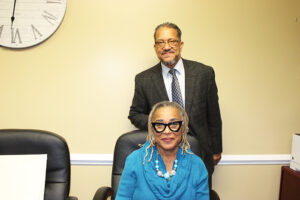
Founded in 1964 by James and Dorothy Day, House of Day Funeral Home is more than a business, it is the continuation of a family story generations in the making. As Michael reflects on the family’s early beginnings, he gestures toward an artistic portrait on the wall.
“Our roots are in the South. I truly love that. The Delta of Mississippi. Cotton,” he says. “And there’s a picture on the wall that probably looks a little similar.”
Practicing Legacy
James Day, a WWII veteran, and Dorothy Day, a teacher and poet, instilled a respect for service and education. The Day children grew up participating in the family’s businesses, learning through hands-on experience. They learned early that ownership was power and service was responsibility.
According to Michael, legacy isn’t something you talk about—it’s something you live. “If you don’t start practicing legacy early,” he says, “you risk losing it.”
That philosophy shapes the House of Day, both in business and in family life. Michael and Cassandra grew up working alongside their parents, and now their children and grandchildren carry on the tradition.
Michael recalled moments of discipline during his youth that now make sense.
“We were unable to do many of the same things as other kids,” he said. “However, we now understand.”
The funeral home teaches the next generation patience, respect for elders, and being present. It also serves as a living lesson in history.
The House of Day Funeral Service provides compassionate, full‑service funeral care tailored to each family’s needs. They offer traditional funeral services, memorial and burial options, cremation choices, and celebrant services with personal attention to every detail—from arranging visitations and floral tributes to preparing obituaries and assisting with paperwork like death certificates and benefits. They also help families create online Books of Memories™ to preserve photos and stories and provide grief support resources to guide loved ones through difficult times.
 Honoring History
Funeral homes, Michael notes, once filled critical gaps in our communities, offering ambulance services and equipment long before systems existed. “We had the vehicles,” Michael says. “We had the cots and the professional equipment. Funeral homes were the first to transport the sick to hospitals. Many people have never heard of this history.”
Cassandra underscores the ongoing mission: “Our pledge is to honor your loved one and family with respect and personal attention to every detail.” This commitment has carried hundreds of families in Ohio and Michigan through grief, paperwork, obituaries, and flowers, all with quiet care and precision.
Legacy, Michael explains, survives through listening. “If you spend time around your grandparents, your aunts, your uncles,” he says, “you learn who you are.” At the House of Day, those voices remain close. Like a relay race run with intention, each generation passing the baton forward.
A Legacy of Black Entrepreneurship
A Black business, Michael believes, is more than a storefront, it is a heartbeat. “When our doors open each morning, they open with memory, responsibility, and care,” he says. The House of Day is one of those places, where our business and our community grow side by side.”
Black-owned businesses rise from families who learned survival before success. They exist because someone once had to create what did not exist. In the case of House of Day, they strengthen entire communities.
When a Black business thrives, jobs are created, trust is built and neighbors feel seen. “At the end of the day, we’re helping people during the hardest moments of their lives,” Michael says. “That responsibility never leaves you.” The work at the House of Day is not taught through lectures; it is taught through presence.
Cassandra agrees. “You learn by being there,” she says. “By doing the work. By seeing how people are treated.” This kind of learning sticks. It teaches discipline, patience and respect. It teaches that work has meaning beyond money. Black businesses often become safe places, training grounds, and proof that ownership is possible.
 Where Care Becomes Community
Michael again emphasizes the urgency of early mentorship: “If you don’t start early, you lose them. You have to show them.”
Showing matters more than telling. When children see Black ownership in action, they see themselves differently. They begin to understand that their hands can build something lasting, that their presence matters.
The House of Day does more than serve families; it teaches a community how to care for itself. When care becomes a shared value, everyone flourishes. It is a place where past and present merge, a story of survival, vision, and love, passed carefully from one generation to the next.
“This didn’t start with a funeral home,” Michael reminds us. “It started with people who saw what needed to be done and did it. That’s what we do every day.”
In Toledo, the House of Day Funeral Home stands as a testament to Black entrepreneurship, resilience and the power of learning by doing.
As night falls on Nebraska Avenue, one detail always remains visible: the illuminated Cross that stands in front.
It glows softly, steady and unmistakable, a quiet signal of faith and hope in moments when families need it most. For many, that light provides a peaceful sense of calm.
“Our faith is part of everything we do,” Michael Day Jr. says. “It’s not something we separate from the business, it’s a guiding light.”
From cotton fields to counters, from dry goods to funeral services, the Day family’s legacy is clear: service, care, and community are inseparable. Every detail handled, every life honored, every lesson passed forward, this is what it means to build something that lasts.
For more information, visit the House of Day Funeral Service