
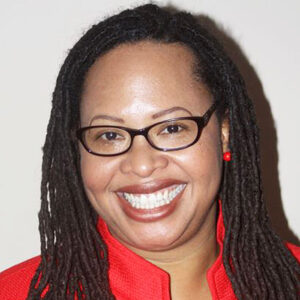
Monita H. Mungo, PhD
Guest Column
Inspired by and written in conversation with Frederick Douglass’s 1852 address, “What to the Slave Is the Fourth of July?”
The 250th birthday of the United States invites celebration, but it also demands reflection. In 1776, the nation declared itself free and announced a bold political vision: that legitimate government rests on the consent of the governed and that human beings possess rights that should not be surrendered to kings, courts, armies or markets.
These ideals remain powerful, but their power lies not only in their promise. It lies in whether the nation has the courage to extend them fully and honestly to all who live under its authority. These ideals are not modest claims. They are among the grandest promises a nation can make for itself. Yet promises, however noble, do not fulfill themselves. They must be tested against the conditions of real people’s lives.
For what is a birthday celebration when the family is divided between those invited into the house and those left outside its locked doors? The contradiction is visible in families sleeping beneath bridges, immigrants treated as threats rather than neighbors, Black citizens still required to defend their belonging, women and girls watching their rights stripped away, and poor people punished for conditions they did not create.
What, then, to the unhoused is the United States’ 250th birthday?
The answer can be found in the lives of people made vulnerable by policy, poverty and public neglect: the veteran sleeping in a car, the mother calling shelters until her phone dies, and the child completing homework in temporary housing. The scale of this failure is not abstract. In its 2025 Annual Homelessness Assessment Report to Congress, the U.S. Department of Housing and Urban Development reported that 745,652 people were homeless on a single night in January 2025, including 266,320 people living unsheltered. HUD also reported that more than 1.45 million people were either homeless or living in taxpayer-funded housing assistance for the homeless.
What, then, to the immigrant is the United States’ 250th birthday?
This nation tells a story about immigrants with one hand and builds machinery of exclusion with the other. It praises Ellis Island while strengthening the border. It celebrates labor while exploiting workers. It relies on immigrants to cook its food, build its homes, harvest its crops, clean its hotels and staff its hospitals, then asks them to disappear.
Pew Research Center estimated that 14 million unauthorized immigrants lived in the United States in 2023, many woven into families, communities, workplaces, schools, churches and neighborhoods. Yet the public language of immigration too often turns humans into invasions, threats, burdens and numbers. Calls for “law and order” often ignore two truths. First, legality and justice have never been the same thing. Second, the law has never been innocent simply because it was written.
What, then, to Black people is the United States’ 250th birthday?
We have been here for the building of the nation and for the breaking of its promises. We have been property and patriots, laborers and soldiers, citizens and suspects, taxpayers and targets. We have carried the flag even when the flag did not carry us.
Must we still argue for the value of Black life? Must we prove again that Black history is this nation’s history? Must we continually demonstrate that police violence, environmental racism, segregated schools, medical neglect, wage gaps and mass incarceration are not outcomes of personal failure but patterns of public power?
The contradiction is measurable in the institutions that decide who is watched, arrested, prosecuted, confined and marked by a criminal record. According to the Prison Policy Initiative’s racial justice data, Black people are approximately 14 percent of U.S. residents but 36 percent of people in prisons and jails. This disproportionality is not evidence of group failure; it reflects the cumulative effects of unequal policing, unequal charging decisions, sentencing disparities, economic exclusion and public policies that have made punishment the primary response to social inequality.
What, then, to those whose civil rights are being narrowed, contested, or stripped away, is the United States’ 250th birthday?
A right that can vanish with a court majority is not secure. A freedom that depends on geography is not equal. A protection that changes at the state line is not fully guaranteed.
Recent legal and political developments make this vulnerability plain. In 2022, the Supreme Court’s decision in Dobbs v. Jackson Women’s Health Organization overturned Roe v. Wade and ended federal constitutional protection for abortion. In 2023, the Court’s decisions in the Harvard and University of North Carolina affirmative action cases severely limited the consideration of race in college admissions. Voting rights, too, remain contested.
The Brennan Center for Justice reported that state legislatures enacted at least 32 restrictive voting laws in 2025, tying the highest total since the center began tracking this legislation in 2011. Together, these developments show how quickly rights and protections can be narrowed when courts, legislatures, and political movements retreat from the work of equality.
The United States’ 250th birthday exposes not only the nation’s ideals but also its contradictions.
The United States has built skyscrapers and tent cities. It has produced billionaires and hungry children. It has expanded rights and withdrawn them. It has welcomed refugees and confined migrants. It has celebrated Black excellence while fearing Black freedom. It has praised workers while weakening unions. It has honored soldiers while abandoning veterans. It has revered the Constitution while refusing to guarantee its blessings to all.
A national birthday is not only a commemoration; it is an accounting. It should ask what promises have been kept, what harms have been denied, what debts remain unpaid, and what kind of future is still possible.
Birthdays invite reflection on how far we have come. But distance traveled does not excuse distance remaining. The enslaved were freed, but racism adapted. Jim Crow fell, but inequality learned new language. The vote was won, but suppression found new tools. Rights were expanded, but rights are now being narrowed. Doors opened, but gatekeepers remain. The United States’ tragedy is that it often speaks justice fluently while practicing injustice efficiently.
At 250, the United States is old enough to know better, rich enough to repair what it has broken, and powerful enough to do better. And because people have struggled, organized, resisted, taught, marched, voted, loved, and refused to surrender, it may yet become better.
Until then, the United States’ 250th birthday is not a jubilee for all. It is a tone-deaf celebration, a summons, a mirror, and a grim warning. Whether this anniversary becomes anything more than ceremony depends on whether the country is willing to confront its record and change course.