 By Fletcher Word
The Truth Editor
How do individuals in the baby boomer generation cope with the challenges presented them by youngsters in the generation z age group? How do millennials navigate their interactions with those in the older and younger cohorts? Does it matter? Can bottom-line performance be enhanced by developing a greater understanding among those of different generations?
That’s the challenge that Willie McKether, PhD, of WLM Cultural Communications accepted during the Generational Differences in the Workplace Conference on Friday, October, 30, 2026, The event, held at the Hilton Garden Inn in Perrysburg, brought together dozens of attendees to unpack the issues that face members of different generations when they interact in the workplace.
The conference was designed to bring together members of the various generations: traditionalists, baby boomers, generation x, millennials and generation z – to explore experiences, values and communication styles.
McKether said that he organized the conference because he “recogniz[ed] that people in difference industries were all facing similar challenges of trying to navigate the complexities of generational differences in the workplace.” So the purpose of the conference was to “try to find solutions.”
The conference opened with registration, breakfast and a welcome by the mistress of ceremonies, Valerie Simmons-Walston, ThD.
Vince DiPosi, CEO of SSOE Group, presented the first address – “Different Perspective, Better by design, The Generational Blueprint. DiPofi spoke of the impact that leadership, good leadership can have on bridging the chasm between generations
“Good leadership isn’t simply evaluating what someone can do today, it’s about creating opportunities for them to become more capable tomorrow,” he said of the basic tenet of bringing people along. DiPofi is retiring as the CEO of SSOE shortly and his successor has been named.
He emphasized that the key to building strong organizations is not only what happens during a leader’s tenure but also what happens afterwards. “The goal is to leave behind an organization capable of changing well.”
And every generation, he noted brings a different perspective.
“Our job isn’t to make the next generation follow our blueprint, it’s to give them enough knowledge to understand it and the freedom to challenge it and the trust to make it better.”
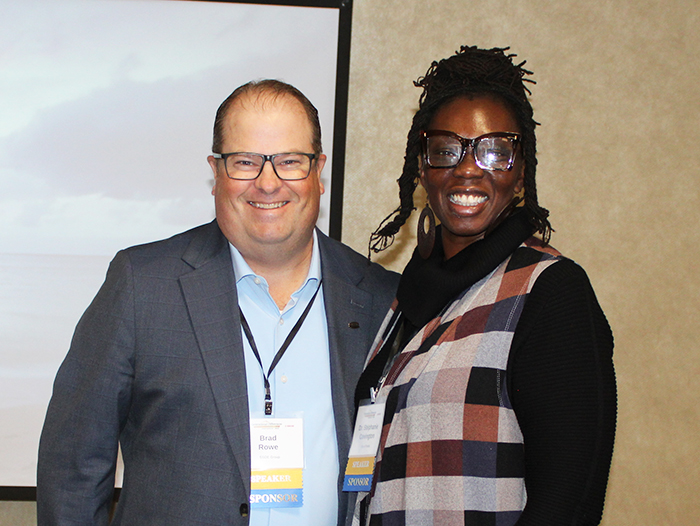
DiPofi’s address was followed by breakout sessions. Sheila Eason was the leader for “Stop Managing Generations, Start Leading Humans.” McKether led “Generations by Design, Why We Think Differently.” Stephanie Covington, PhD, and Brad Rowe, SSOE Group, led “From Challenge to Strategy, SSOE and the City of Toledo on Leading Across Generations. Erica Parish led “Bridging Communition Across Generations and Cultures.”
Then came the keynote address by Tim Elmore, PhD, founder, Growing Leaders. The Atlanta-based Elmore is a best-selling author of numerous books including The Future Begins with Z.
“I’m going to talk about building a bridge not a wall based on the notion that our brains tend not to want to do the work to connect with someone when they are different from us, where its race or age or gender,” Elmore told The Truth just before he took the stage.
“So I’m going to talk about the benefits, the advantages, of connecting with a gen z’er when you are a boomer or a gen x’er … that they have something to impart to you and vice versa [not like] that the old school way of thinking that the mentor is old and the mentee is younger. And how do we do more than tolerate each other?”
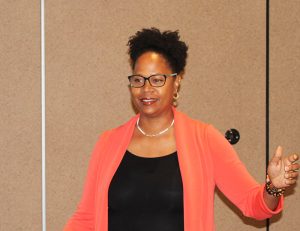
During his speech Elmore did just that, first clearly delineating the generations and ensuring that his audience understood the perceived differences in the generations – how they communicated and how they perceived their status in the world
Elmore’s definition of the five generations are: the builders, or the silent generation (those born 1926-1945); baby boomers, or pig in python generation (1946-1964); the baby busters, or generation X (1965-1982); the millennials, or generation y (1983-1999); the homelanders, or generation z (2000-2015).
“We need to get curious not furious with each other,” said Elmore as he delved into the stereotypes of each generation while noting that such stereotypes were so harmful to establishing an effective dialogue and interaction. “Isn’t it easy to stereotype?” he asked his audience.
He summarized his speech by suggesting that each generation give the others A LEG up in discourse with them. Ask, Listen, Empathize, Guide.
The conference continued after lunch with several panel discussions. The first panel: Every Generation Teaches, Every Generation Learns, a multi-generation panel on leadership, trust and the future of work was led by moderator Heather Mallette with panel members Riley Rummels, Jay Martinex, Amira Welch and Samual Chang.
The second panel: Bringing It All Together, a discussant response was led by Princeton Bryson and included Elizabeth Briody and Barbara Singer. This panel synthesized insights from the day’s presentations and offered recommendations for applying the ideas generated therein.
According to McKether this will not be the last such effort to bridge the gaps.
“I’m looking forward to carrying this forward, looking forward to start a conversation that will extend throughout the year. Next year we will do this again.”