
 By Asia Nail
The Truth Reporter
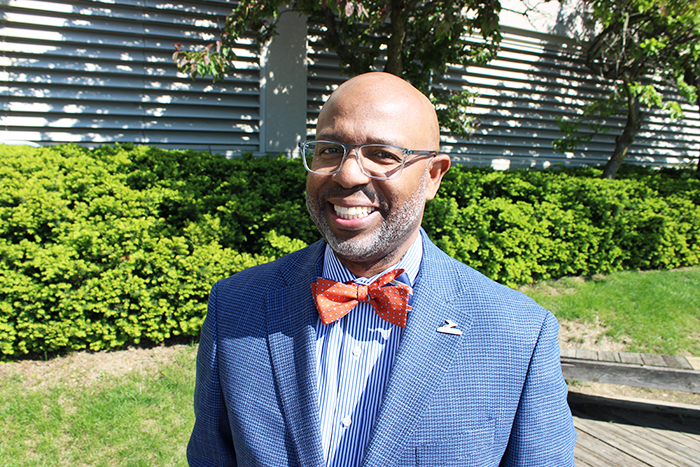
Some people look at numbers and only see profit and loss. Craig L. Teamer looks at numbers and sees people.
He sees the daycare owner trying to keep the lights on. The contractor waiting 60 days to get paid. The small business owner with a dream bigger than their bank account.
And at the Toledo-Lucas County Port Authority, helping those people has become part of his life’s work.
“There’s never a dull moment,” Teamer says with a laugh.
That may be the understatement of the year.
As Director of Finance & Special Projects, Teamer oversees several programs designed to help businesses get access to capital, especially businesses that may not qualify for traditional bank loans. But his path to this work did not happen overnight. Like many careers, it unfolded one conversation at a time.
A Second Call That Changed Everything
Before joining the Port Authority in 2017, Teamer spent more than 20 years in banking and corporate finance. He worked for companies including The Andersons, Inc., where he helped finance the company’s current headquarters building.
Ironically, one of the financing tools used on that project came from the Port Authority itself.
That is how he met Thomas Winston.
“At the time, Winston was the chief financial officer,” Teamer says. “After we closed the transaction, he approached me and asked if I’d be interested in coming to the Port.”
Teamer politely declined.
Then Winston came back a year later.
“My wife said, ‘This is the second time he’s reached out to you. Maybe you should sit down and have the conversation,’” Teamer recalls.
That conversation changed everything.
For Teamer, a Toledo native, the opportunity felt personal. Economic development was not just business. It was home.
“It was a great opportunity to do impactful economic development in Toledo,” he says. “That’s really been the draw for me, and it’s what’s kept me here.”
Looking Beyond the Risk
The shift from traditional banking to economic development changed the way Teamer views finance.
“In banking, sometimes things are very black and white,” he explains. “At the Port, you have to look at projects more holistically.”
In other words, numbers still matter. But so do neighborhoods. Jobs. Families. Communities.
A banker may see risk. Teamer says the Port Authority also looks at possibilities.
“It’s not just, ‘Does this project make sense on paper?’” he says. “It’s also, ‘What’s the impact from a job’s perspective? A neighborhood perspective? A social perspective?’”
His work often feels less like crunching numbers and more like building bridges between ideas and opportunity.
Helping Main Street Stay Alive
That broader vision became especially important during the COVID-19 pandemic, when businesses across the country were struggling just to survive.
Out of that crisis came one of Teamer’s biggest projects yet: the Northwest Ohio Revolving Loan Fund.
The program was built from the ground up almost like assembling a car engine piece by piece while the vehicle was already moving down the highway.
“We had to create the whole framework from scratch,” Teamer says. “The documents, the processes…all of it.”
Today, the Revolving Loan Fund helps Main Street businesses with loans ranging from $10,000 to $300,000. The program has already funded nearly $2 million in loans.
And those businesses are not giant corporations with skyscrapers and private jets.
Main Street businesses are small, local businesses that serve everyday community needs. Think of the kinds of places you’d find on a town’s main road or in a neighborhood strip.
They’re usually things like:
- Local restaurants and cafés
- Hair salons and barbershops
- Daycares and childcare centers
- Small retail shops and boutiques
- Auto repair shops
- Landscaping or cleaning companies
- Family-owned service businesses
What makes them “Main Street” isn’t just location, it’s size and role. They’re typically small to mid-sized, locally owned, and focused on serving people in their own community rather than operating nationally or globally.
These are the kinds of businesses that quietly hold communities together like stitches in a favorite jacket.
“We’ve helped daycares, we’ve helped landscapers, we’ve helped owners open their own retail shops,” Teamer says.
He believes access to capital can be the difference between a business staying stuck or finally moving forward.
“Not everybody can walk into a traditional bank and get financing,” he says. “Especially startups or businesses that are only a few years into their journey.”
That is where programs like the Port Authority’s come in.
Giving Contractors a Fair Shot
Another major initiative is the Diversified Contractors Accelerator Program, also known as DCAP. The program helps minority- and women-owned contractors compete for larger public and private construction projects.
Sometimes the biggest obstacle is not talent. It is timing.
A contractor may land a major project but still need money upfront for supplies, materials, and labor while waiting weeks to get paid.
“It puts them at a disadvantage,” Teamer explains.
DCAP helps bridge that gap.
Since 2010, the program has helped support nearly $8.8 million in approved projects.
“It gives contractors access to capital so they can compete,” he says.
For many business owners, that support can feel like finally getting oxygen after holding their breath for too long.
Success Is Bigger Than Spreadsheets
Still, for all his financial expertise, Teamer says success is not just about mastering spreadsheets.
“The technical things, you can learn those,” he says. “But being able to communicate, present yourself, think strategically, and talk with people — those things matter, too.”
He encourages young professionals to read widely, stay informed, and never stop asking questions.
“Don’t be afraid to ask questions,” he says. “Read as much as you can. Not just about your trade, but about the world around you.”
That mindset was shaped partly by mentors who poured into him long before he reached leadership positions.
“I had mentors who saw things in me that I probably didn’t see in myself,” he says.
Now, he tries to do the same for others through community service and leadership organizations, including United Way of Greater Toledo and Alpha Phi Alpha Fraternity, Inc..
“To whom much is given, much is required,” he says.
The Legacy He Hopes to Leave
For Craig Teamer, service is also about setting an example for his children.
“Everything can’t be about work,” he says. “I want my kids to see that serving others matters too.”
When asked what legacy he hopes to leave behind someday, Teamer pauses.
Then his answer comes quietly and simply.
“I always tried to do the right thing,” he says.
The strongest foundations are often built with the simplest bricks.
Learn more about the programs, financing tools, and economic development initiatives at the Toledo-Lucas County Port Authority by clicking here